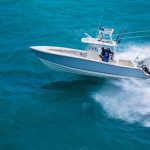

You’ve probably seen a jet boat shoot across a shallow Michigan river and wondered, how do jet boats work and are they actually practical for your fishing style? You’re not alone. This guide breaks down how water-jet propulsion really moves a hull, why Michigan’s rivers and Lake Michigan create unique conditions, and whether a jet boat is a smart buy for your fishing goals. Along the way, you’ll get Michigan-specific safety notes, gear checklists, and realistic trade-offs so you can make a confident call. We’ll also explain how jet boating in Michigan rivers can enhance your fishing experience.
Understanding How Jet Boats Work
At the heart of a jet boat is a water-jet pump that turns water velocity into forward thrust. Water enters through a flush intake on the hull bottom, an internal impeller accelerates it, a stator straightens the flow, and a steerable nozzle fires the water out the transom. Newton’s third law does the rest: eject water backward fast enough and your hull goes forward. Because there’s no exposed propeller, you can run shallower, slide over gravel bars at speed, and avoid prop strikes that would sideline a traditional outboard. Understanding how do jet boats work is key to appreciating why they are ideal for Michigan rivers for fishing.
Two details matter for anglers: cavitation and debris. Cavitation is when pressure at the impeller drops enough to form vapor bubbles, stealing thrust and sometimes vibrating the hull. In weedy or sandy rivers, a clogged intake grate also kills performance. Modern intakes and wear-ring clearances help, but you still need smart throttle use—steady inputs keep the pump hooked up. Manufacturers like HamiltonJet emphasize the shallow-water advantage thanks to their flush intake design and steerable nozzle, which is exactly what gives jet boats their “point and shoot” feel in tight channels.
In short, a jet boat trades some top-end efficiency for unmatched maneuverability and shallow-draft access. If your fishing happens where props fear to go, that trade can be a win. This explains why jet boats for fishing in Michigan are increasingly popular for river anglers.
The River & Lake Environment in Michigan — Why It Matters
Michigan gives you two very different playgrounds: winding inland rivers with shifting gravel bars, logjams, and sudden depth changes, and a big-water coastline on Lake Michigan where wind, waves, and marine forecasts call the shots. On narrow rivers, the shallow-running, snag-resistant nature of a jet boat shines. On Lake Michigan, you’ll be watching weather windows, wave periods, and Small Craft Advisories from the National Weather Service. That’s why jet boats for lake fishing require careful attention to conditions and planning.
There’s no single nationwide definition of a “small craft,” but the NWS issues Small Craft Advisories on the Great Lakes when wind and wave thresholds for your area are likely to challenge smaller boats. If an advisory is up, that’s a strong signal to reschedule a jet-boat trip on open water and stick to protected rivers instead.
Bottom line for Michigan: rivers reward the jet drive’s shallow draft and tight steering; Lake Michigan punishes any hull if you ignore forecasts. Jet boating in Michigan rivers can maximize fishing success and minimize damage risk.
| Criterion | Jet Boat | Prop Boat | Source |
|---|---|---|---|
| Shallow-water access | Excellent, flush intake & no exposed prop | Moderate to poor in thin water; prop strikes possible | Industry comparison |
| Tight maneuvering in rivers | Very strong, steerable nozzle & instant thrust | Good in hands of an expert, but prop walk/strike risk | Dealer reports |
| Big water efficiency/noise | Lower efficiency at cruise; throttle carefully in chop | Generally higher cruise efficiency offshore | Industry data |
| Intake vulnerability | Watch weeds/sand; clear grate if performance drops | Props can foul too; damage risk from strikes | Manufacturer notes |
Are Jet Boats Suitable for Fishing on Michigan Rivers & Lakes?
Short answer: on inland rivers, absolutely. On Lake Michigan, it depends on hull size, freeboard, fuel range, and conditions on the day. Let’s break it down.
Benefits of Using a Jet Boat for Fishing
- Access more water: With no exposed prop and a shallow running draft, you can thread skinny channels and hop gravel bars that keep prop rigs out. This is the main reason jet boats for fishing in Michigan are so effective.
- Quick repositioning: The steerable nozzle gives you crisp, low-speed control around logjams and seams. That helps you stick to a precise drift or recast angle without spooking fish.
- Fewer prop hazards: In debris-laden rivers, skipping prop-strike repairs alone can keep your season rolling.
Challenges Specific to Fishing
- Intake management: Weeds and leaves can load the grate; you’ll feel it as lost holeshot or RPM without speed. A quick shut-down and clear often fixes it.
- Drift control: Without a skegged lower unit, cross-winds and current changes can push your stern around. Many anglers add a keel guard or use the trolling motor and anchor systems for micro-positioning.
- Noise signature: Pump whine can be higher than a comparable four-stroke at idle. Smart throttle use and hull damping help.
Suitability on Lake Michigan vs Inland Rivers
On Lake Michigan, your limiting factor is not the drive type—it’s freeboard, deadrise, and how carefully you respect marine forecasts. Even a well-set-up jet boat should avoid open-coast runs when a Small Craft Advisory is posted. Your safest bet is picking leeward bays, short weather windows, and keeping a conservative fuel and range cushion. On inland rivers, jet boating in Michigan rivers is often the best tool: shallow draft, precise handling, and fewer repairs when the river drops late in the season.
| Water Type | Jet Boat Fit | Why It Works | Note |
|---|---|---|---|
| Shallow inland rivers | Excellent | Flush intake, no prop, quick steering | Dealer guidance |
| Weedy backwaters | Good with caveats | Watch for grate clogging, clear when needed | Owner experience |
| Open Lake Michigan | Conditional | Check forecasts, avoid advisories | Weather data |
| No-wake zones | Neutral | Obey local rules; tight slow-speed control | State regulations |
Practical Considerations Before Deploying a Jet Boat for Fishing in Michigan
Before you tow to the ramp, dial in your gear, safety plan, and legal must-haves. Michigan’s rivers and Lake Michigan each add a few to-dos you should not skip.
Essential Gear to Bring
Think in systems: boat handling, fish finding, and trip resilience. A compact push pole helps if you settle into a shallow bar. A short-shaft electric trolling motor pairs well with a jet for stealth. A spare intake grate tool and a floating knife help you clear weeds fast. And because you’ll cover water quickly, keep your net and pliers staged—missed fish happen when tools are buried under deck bags.
| Category | Item | Why It Matters | Reference |
|---|---|---|---|
| Boat handling | Push pole, anchor, spare intake tool | Free yourself from bars, hold position, clear debris | Best practice |
| Safety | USCG-approved life jackets for all aboard | Required on all vessels; kids under 6 must wear on open deck underway | Michigan DNR |
| Navigation | NOAA/NWS app or marine forecast source | Avoid Small Craft Advisory conditions on Lake Michigan | Weather service |
| Regulatory | Michigan fishing license | Required for ages 17+; 2025 license season in effect | DNR |
Safety and Regulations on Michigan Rivers and Lake Michigan
Michigan requires a wearable life jacket for every person on board. Children under six must wear an approved PFD on the open deck while underway. Keep your navigation lights, fire extinguisher, and signaling gear in working order. On the Great Lakes, treat marine forecasts like a launch gate; if a Small Craft Advisory is issued, scale back or switch to an inland river. Always drain and dry your bilge and livewells to combat aquatic invasive species before you hop to a different water body.
A license is required for anglers ages 17 and up, and Michigan’s 2025 season/regulation cycle is in effect. You can buy your license digitally via the DNR Hunt Fish app—handy if you’re rigging at the ramp.
Frequently Asked Questions
What are the downsides of a jet boat?
You trade some cruise efficiency and top-end speed for shallow-water access and maneuverability. In weedy rivers, the intake can clog and you’ll feel sluggish holeshot or high RPM with low speed. Noise at certain RPM bands can be sharper than a comparable four-stroke prop rig. If your fishing is mostly offshore trolling on Lake Michigan, a deeper-V prop boat may suit you better.
How does a water jet boat work?
Water is pulled through a hull intake, accelerated by an impeller, straightened by a stator, and blasted out a steerable nozzle to create thrust and steering. With a flush intake and no exposed propeller, you can run shallow and pivot precisely in current. Understanding how do jet boats work is key to using them effectively on Michigan rivers for fishing.
Are jet boats good for rivers?
Yes—this is their sweet spot. The shallow draft and nozzle steering let you reach gravel bars, seams, and tight bends that prop boats avoid. That’s why many river guides and anglers prefer jet boats for fishing in Michigan.
How shallow can a jet boat really run?
It depends on hull, load, and speed. Some jet platforms advertise operation in just a few inches of water when on plane, but expect more margin when idling. Know your local river and keep a push pole handy.
Do Michigan no-wake zones and life jacket rules apply to jet boats?
Yes. Drive type doesn’t change compliance. Obey all posted no-wake zones, carry a wearable life jacket for every person aboard, and ensure children under six wear an approved PFD on the open deck while underway.
Conclusion
If your fishing life revolves around Michigan’s inland rivers, a jet boat can feel like a cheat code—more spots unlocked, fewer prop worries, and point-and-shoot control in current. If you mostly chase open-coast windows on Lake Michigan, the trade-offs shift: watch forecasts, pick your days, and weigh whether a deeper-V prop boat matches your runs better. Either way, understanding how do jet boats work, keeping your intake clear, and following Michigan’s safety and licensing rules will keep you fishing more and wrenching less.
References
- HamiltonJet — Why Waterjets (2025)
- Michigan DNR — 2025 Fishing Licenses
- Michigan DNR — Fishing Regulations 2025
- NOAA — Marine Weather & Small Craft Advisories 2025
- NOAA GLERL — Great Lakes Environmental Research Lab Blog 2025
- Industry Comparison — Jet vs Prop Boats 2025
- Shallow-Water Operation for Inflatable Jet Boats 2025