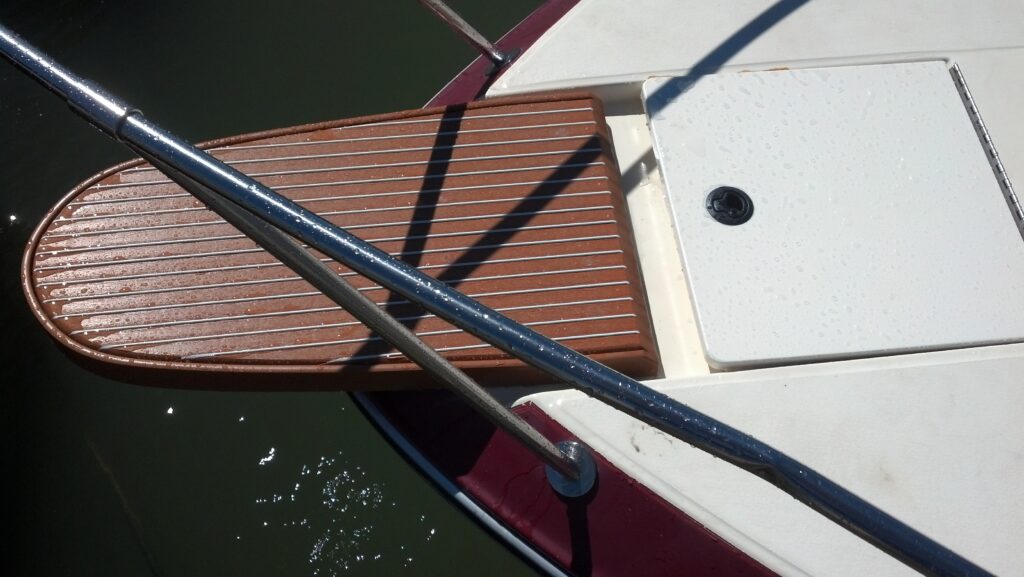
How to Make a Bow Pulpit with Stainless Steel Tubing (2026 DIY Guide)
If you have ever looked at your foredeck and thought, “I just need a stronger, smarter platform up there”, you are in the right place. This guide shows how to make a bow pulpit that combines a tough fibreglass bow pulpit base with a stainless rail that feels like proper factory hardware, not a wobbly add-on.
You will build it like a practical boat owner: template first, mock-up early, seal every hole, and only then commit to resin, paint, and welding. If you are specifically researching how to make a bow pulpit for sailboat use, the same process applies, you will just tune the rail height and line-leads to your deck layout.
Preparation for Making a Bow Pulpit
Before you touch a saw or a welder, decide what your custom bow pulpit is actually for. “Looks tidy” is not a requirement. “Holds a human leaning forward, takes anchor loads, carries a windlass, and does not leak into the core” is the requirement. This prep step is where a lot of DIY builds quietly succeed or fail.
Define your real-world use
Make a short list of what will live on the pulpit: anchor roller, windlass, cleat, nav light, a small ladder step, or just a safe standing area. A stainless steel bow pulpit rail is mainly a safety handhold and a line guide, but your platform must carry the more serious loads.
Read More: How to Choose the Right Bow Pulpit for Boat: 7 Expert Tips
Measure “footprint” and access constraints
Most bow pulpits are limited by three things: the anchor locker lid swing, the curvature of the bow, and your ability to reach fasteners underneath. Do not guess. Open the locker fully, hold a bit of cardboard over the bow, and mark where your hands can realistically reach for washers, use an inspection port, or place backing plates.
Decide on a build style: platform + rail versus all-rail
Many people searching how to make a bow pulpit assume it is “just stainless tubing”. In practice, a platform is often easier to live with: you get a flat, non-slip surface for footing, and you can set hardware with proper backing. The rail then becomes a clean perimeter and grab point, not the only structure.
Plan your “no leaks” strategy for a cored deck
If your foredeck is cored (very common), you must treat every fastener hole as a water path until proven otherwise. A reliable method is to over-drill, remove core around the hole, fill with thickened epoxy, then re-drill to the final bolt size, so water cannot migrate into the core.
Materials and Tools Needed for Making a Bow Pulpit
This is the point where you keep yourself honest. The aim is not to buy everything in the chandlery. The aim is to buy the right grades and sizes once, so your custom bow pulpit does not turn into a corrosion experiment or a soft, flexing platform.
Tools you will realistically use
You do not need a shipyard. You do need accuracy. A jigsaw or circular saw for the core, a sander, a drill with sharp bits, clamps, measuring tools, and basic fibreglass tools (mixing pots, spreaders, rollers). For the rail: a tube bender (or a local fabricator), a way to cope tube ends, and a welding setup if you will weld yourself. If you are not an experienced welder, you can still learn how to make a bow pulpit by doing the template, platform, and fit-up, then paying a fabricator to weld and polish.
| Item | Practical spec | Why it matters | Notes |
|---|---|---|---|
| Stainless tubing (rail) | 316 stainless, 25–32 mm OD, ~1.6 mm wall | 316 is commonly preferred for marine corrosion resistance due to molybdenum content | Match existing stanchion/rail diameter if you want it to look “meant to be there” |
| Flat plate for feet / pads | 316 stainless plate, typically 3–6 mm | Spreads point loads and gives a proper landing for bolts | Radius edges to avoid stress risers and shin-eaters |
| Core for pulpit platform | Marine plywood (sealed) or foam core (epoxy compatible) | Creates thickness and stiffness without making it absurdly heavy | Plywood is forgiving for first-timers if you fully seal it |
| Fibreglass cloth + resin | Epoxy resin system plus glass cloth | Epoxy is widely used for strong secondary bonding and sealing cores | Follow the resin maker’s mix ratio and safety guidance |
Source notes: 316 vs 304 stainless differences are commonly explained via composition and corrosion performance.
How to Make a Bow Pulpit
The build below is a reliable “owner-built” path. You are essentially building a fibreglass bow pulpit platform first, then adding the stainless rail as a separate, controlled job. This is also the easiest way to adapt the same method if you are researching how to make a fiberglass bow pulpit for a small cruiser, or how to make a bow pulpit for sailboat deck hardware where you need careful line routing.
1. Fiberglass Bow Pulpit Template: Trace the Locker Lid
Start with thin plywood, cardboard, or MDF and make a full-size template. Trace the anchor locker lid perimeter, then mark a clearance line so the lid can open without rubbing your future platform. Add “real life” marks: the bow curve, any toe-rail, cleat bases, nav light wiring exits, and where your hands can actually reach underneath.
This is also where your custom bow pulpit becomes your boat, not a generic drawing. Keep adjusting until it sits naturally, then tape it down and step around it. If you are unsure, this is the moment to slow down. Template time is cheap. Rebuilding a platform after lamination is not.
2. Laminated Core for a Fiberglass Bow Pulpit: Cut and Glue Plywood
Transfer the template to your core material. If you are using marine plywood, cut two or more layers and laminate them to reach your target thickness. A practical DIY thickness is usually enough to keep the platform stiff under your weight without needing a huge laminate schedule.
Glue layers with thickened epoxy (or an epoxy adhesive designed for laminating), clamp evenly, and let it cure fully.
3. Fiberglass Bow Pulpit Fit Check: Shape, Sand, and Dry-Place
Once the core is bonded, round over edges slightly and sand the surfaces so glass cloth will lay down without bridging. Dry-place the blank on the bow and check:
• Locker lid clearance
• Foredeck curvature and rocking points
• Anchor roller alignment (if fitted)
• Safe footing and toe room
If it rocks, do not “fix it with bolts”. Shape the underside to match the deck, or add a bedding layer plan (see Step 8). A good fit makes sealing easier and reduces long-term movement.
4. Hardware Layout on the Fiberglass Bow Pulpit: Holes + Access Port
Mark every piece of hardware you plan to install: rail feet, anchor roller, windlass (if any), cleat, and nav light. Then mark your “under-deck reality”: where backing plates will sit, what washers you can fit, and whether you need an access port.
If you add an inspection/access port, place it where it helps you reach multiple fasteners, not just one. Many cored-deck hardware failures come from poor access that leads to under-sized washers or “I will just use screws”. A through-bolted fitting with a proper backing plate spreads loads and reduces the chance of pull-through.
5. Fiberglass Bow Pulpit Lamination: Resin, Cloth, Fair, Smooth
Seal the core first. A “sealed core” is not a vibe, it is a job: coat all faces, edges, and cut-outs. Then lay your cloth schedule. Aim for a neat, void-free laminate rather than a thick, lumpy one. Work on a stable bench, pre-cut cloth, and wet out methodically.
Safety is not optional. Epoxy and fibreglass dust can cause sensitisation and respiratory irritation. Use gloves, ventilation, and suitable respiratory protection for sanding and cutting operations, as per established safety guidance.
| Task | Best-practice check | Why you care | |
|---|---|---|---|
| Mixing epoxy | Follow the stated resin-to-hardener ratio exactly | Incorrect ratios can lead to poor cure and weak bonds | |
| Preventing overexposure | Gloves, ventilation, avoid skin contact | Reduces sensitisation and health risks | |
| Sanding cured laminate | Use dust control and appropriate masks | Fibreglass and composite dust is a respiratory hazard |
Once cured, fair the surface with an epoxy fairing compound, sand smooth, and keep checking your edges and corners. A pulpit is a place people kneel, stand, and grab. Make it kind to hands and knees.
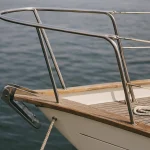
6. Stainless Rail for the Fiberglass Bow Pulpit: Bend, Weld, Dress
This is the step that makes your build look “real”. A stainless rail is not just bent and bolted. It is measured, mocked up, bent to match the bow shape, then welded and dressed so it does not snag lines or shred knuckles.
Mock-up first: use cheap conduit or PVC pipe to test your rail shape and height. Mark where you want the top rail to sit when you are braced at the bow. On many boats, a comfortable grab height is roughly around mid-thigh to hip level when you are standing on the platform, but your deck height and stance will decide it.
Bending: a proper bender prevents flattening and kinks. If your tubing does not match your other rails, the whole custom bow pulpit will look like an afterthought. Consider matching diameter and radius style with your existing guard rails.
Welding and inspection: stainless weld quality matters because cracks and crevice corrosion often start at poor welds or poorly finished joints. Welding standards such as AWS D1.6 cover requirements for welding stainless steel structural components and provide a framework for fabrication and inspection.
Dressing and finishing: grind and polish welds to a smooth profile. Avoid leaving sharp steps where water sits. The goal is a rail that feels seamless to the hand and does not chew through mooring lines.
Material choice matters as well. 316 stainless is commonly favoured for marine environments compared with 304, due to improved resistance to chloride-related corrosion.
7. Fiberglass Bow Pulpit Finish: Prep and Paint (or Gelcoat)
Finishing is not just cosmetics. It is UV protection and grip. If you leave epoxy unprotected, it will chalk and degrade in sunlight. Your options:
• Paint: prime properly and use a marine topcoat. Add a non-slip additive in “standing zones”.
• Gelcoat: possible, but more technique-sensitive if you are new to composites.
• Tread pads: useful, but do not rely on pads to hide poor prep.
Mask off hardware landings so your backing plates sit on stable, flat surfaces. The more even your finish, the easier it is to spot early cracks or sealant failure later.
8. Mounting the Fiberglass Bow Pulpit: Seal, Bolt, Align
This is the part where people either build a watertight upgrade or accidentally create a future deck repair. Treat every bolt as a plumbing fitting. Your sequence:
1) Mark and drill pilot holes through the pulpit and deck, then confirm under-deck clearance.
2) Over-drill and isolate the core if the deck is cored. Remove core around the hole, fill with thickened epoxy, cure, then drill the final hole. This reduces the risk of water intrusion into the core structure.
3) Dry-fit all bolts with backing plates or large washers, then remove and prepare for bedding.
4) Bed the hardware correctly so sealant sits where it can do its job. Practical guidance on mounting hardware on cored decks emphasises correct sealing practices and avoiding trapping water where it cannot be detected.
5) Through-bolt and torque gradually in a cross pattern, letting sealant squeeze-out evenly.
Backing plates: use them whenever you can. They spread load and reduce the chance of fasteners pulling through decks or fittings working loose over time.
| Mounting detail | Good DIY approach | What it prevents | Source |
|---|---|---|---|
| Cored deck holes | Core isolation with thickened epoxy, then re-drill | Water migration into core and long-term delamination | Steve D’Antonio, hardware in cored composites |
| Backing plates | Use plates rather than tiny washers for high-load hardware | Fastener pull-through and deck crushing | BoatUS backing plates guidance |
| Sealant practice | Seal from above, keep the underside visible for leak detection | Hidden leaks and trapped moisture | Marsh Design, cored deck mounting |
Finally, align the rail and platform so it is visually straight from the helm view. Do not underestimate this. A slightly skewed pulpit is the kind of thing you see forever once it is installed.
9. Fiberglass Bow Pulpit Sea Trial: Waterproof Wiring and Test
Your first “sea trial” does not need drama. It needs a checklist. If you have a nav light, windlass wiring, or any deck-level electrics, waterproof the cable runs and use drip loops so water cannot track down the cable into the locker.
Then test in stages:
• Dockside: grab the rail hard, bounce your weight on the platform, and look for flexing or bedding squeeze-out.
• Short run: run into small chop and listen for creaks or movement.
• Re-check: inspect all fasteners and bedding after the first outing.
If you are documenting how to make a bow pulpit for future you, take photos of the underside backing plates and the sealant lines now. Those pictures are gold when you inspect it later.
Safety and Load Testing for Making a Bow Pulpit
If you want your build to feel trustworthy, you must test it like you do not fully trust it yet. That is not pessimism, it is seamanship. A bow pulpit gets leaned on when you are tired, wet, and trying to sort an anchor in awkward conditions.
Workshop safety
Epoxy safety: avoid skin contact, use gloves, and ensure adequate ventilation. Manufacturer safety guidance exists for a reason, and sensitisation can be permanent.
Dust safety: cutting and sanding composites can produce irritating fibres and dust. Use dust extraction and appropriate respiratory protection.
Hot work safety: if you weld or grind stainless, keep flammables away, protect nearby gelcoat and glass, and wear eye and face protection. If you are not confident welding structural joints, outsource the welding and do the fit-up yourself. You can still truthfully say you learned how to make a bow pulpit, because the accuracy and installation work is the majority of the success.
Simple load tests you can do without special equipment
Use these as practical checks, not as a substitute for professional engineering:
1) Rail pull test: stand on the platform and pull the rail towards you with bodyweight force. Watch the base, not just the rail.
2) Platform bounce test: bounce gently then firmly. You should not see the platform “oil can” or hear cracking.
3) Hardware torque re-check: after the first run, confirm fasteners have not loosened as bedding settles.
What “good” looks like
Good: minimal flex, sealant lines intact, no weeping, backing plates holding firm, no movement when you push side-to-side.
Stop and fix: cracks around fasteners, any leak path into the locker or core, visible deck crushing, rail wobble at the feet, or creaking that gets worse with load.
Most issues are not catastrophic if you catch them early. If your sealant line fails, you remove and re-bed. If you ignored core isolation and water got in, you will eventually be doing a bigger repair. That is why this guide leans so hard on sealing and backing plates.
Conclusion
Once you break it into template, platform, rail, and mounting, how to make a bow pulpit becomes a sequence of manageable jobs rather than one intimidating project.
If you want your stainless steel bow pulpit to last, build it like you plan to keep the boat. Water finds shortcuts. Your job is to make sure it does not find one through your new hardware.
FAQ
What is a fiberglass bow pulpit used for?
A fibreglass bow pulpit is typically used as a stable platform at the bow for safe footing, anchor handling, and mounting deck hardware such as an anchor roller, cleat, or windlass. In many custom bow pulpit builds, the platform provides the stiffness while the stainless rail provides the handhold and line control.
Is fiberglass strong enough for a bow pulpit?
Yes, if it is built correctly. A fibreglass structure with a sealed core, a sensible laminate schedule, and properly backed hardware can be very strong. The weak points are usually not “fibreglass versus metal”, but water intrusion into a core, poor bonding, or hardware mounted without backing plates. Core isolation and correct mounting practices are widely recommended for cored composites.
How long does it take to build a custom bow pulpit?
For most DIY owners, the time is dominated by curing, sanding, and re-checking fit. The template and core work can be done in a couple of weekends, but lamination, fairing, and finishing often stretch longer because you work in stages. If you outsource bending and welding, you can shorten the “metal time” while still doing the core work that defines how to make a bow pulpit properly.
Can I install a bow pulpit myself?
You can, provided you can safely access the underside for through-bolting and backing plates, and you take sealing seriously. The critical DIY skill is not “strength”, it is clean drilling, core protection, and careful bedding so you do not create leaks. Guidance on installing hardware in cored composites and using backing plates is a good baseline before you drill.
What is the safest way to handle epoxy and fibreglass when making a bow pulpit?
Follow manufacturer safety guidance: avoid skin contact, wear gloves, ensure ventilation, and use appropriate respiratory protection for sanding and dust-producing tasks. These precautions are specifically recommended in epoxy safety and shop hazard guidance for composite work.
References
BoatUS. (2020, September). The critical world of backing plates. https://prod-boatus-cd2.boatus.com/expert-advice/expert-advice-archive/2020/september/the-critical-world-of-backing-plates
Marsh Design. (2012, October 9). Mounting hardware on cored decks: Right and wrong ways. https://marine.marsh-design.com/content/mounting-hardware-cored-decks-right-and-wrong-ways
Wang, D., et al. (2021). Comparison of 304 and 316 stainless steel (corrosion resistance findings). International Biodeterioration & Biodegradation. https://www.sciencedirect.com/science/article/abs/pii/S1350630721000637