10 Pontoon Boat Layout Ideas for 2026: Smart, Space-Saving Designs
If you’ve ever stepped onto a pontoon and thought, “This feels huge… until everyone gets on board,” you already get why pontoon boat layout ideas matter. The right floor plan makes the difference between a relaxed day and a constant shuffle of coolboxes, kids, fishing gear, and elbows.
This guide breaks down ten proven layouts (with practical pros, trade-offs, and “what to look for” details), plus space-maximising tips you can actually use when comparing boat floor plans.
Why Pontoon Boat Layouts Matter
A pontoon’s deck is basically one big rectangle, so it’s tempting to assume every setup feels the same. In reality, the furniture placement changes everything: traffic flow, where people naturally gather, how easy it is to land a fish without hooking a cushion, and how quickly you can switch from “cruise mode” to “picnic mode”.
When you’re comparing pontoon design options, focus on three things first: walkways (how you move), zones (where people sit, cook, fish, or sunbathe), and storage access (how quickly you can grab what you need without emptying a whole compartment). Manufacturers often label these as “layouts” or “floorplans”, but what you’re really buying is a daily routine on the water.
10 Pontoon Boat Layout Ideas
1. Traditional Cruise Layout (L-Shape Couch)
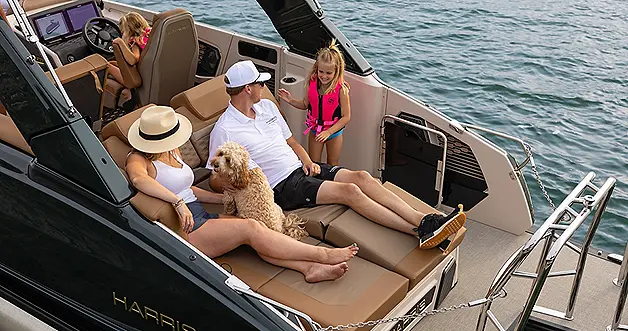
This is the classic “family cruise” arrangement: an L-shaped lounge (often in the stern), open deck space for moving around, and a social feel that doesn’t force everyone into separate corners. If your priority is comfort and simple people-moving, this layout stays popular for a reason.
Why it saves space: the L-shape compresses a lot of seating into one footprint, which can free up a cleaner central walkway. It’s also great if you like to keep one side clear for a pram, a folding table, or a big coolbox.
Watch-outs: some L-lounges look roomy on paper but pinch the walkway around the helm area. When you look at boat floor plans, check whether the corner of the L blocks the easiest route to the gate, ladder, or head/changing area.
Best for: relaxed cruising, casual entertaining, families who want “everyone together” seating.
2. Quad Lounger or RF (Rear-Facing) Layout
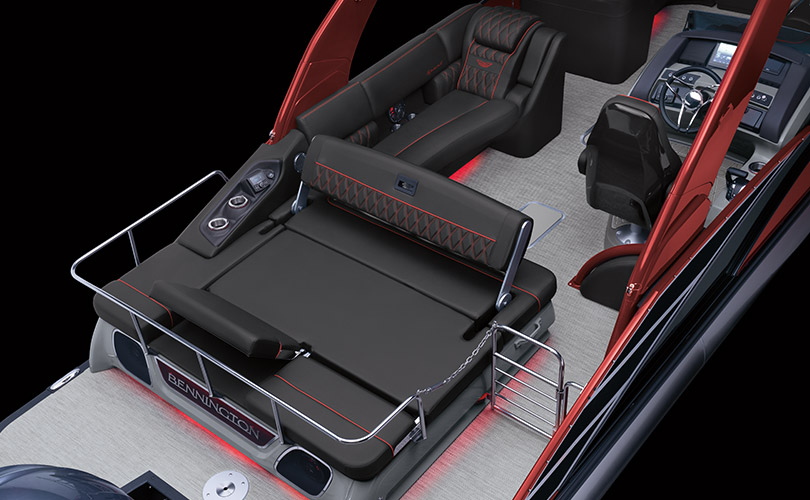
If you’ve ever wanted a pontoon that feels like a floating patio, the quad lounger is the vibe. You typically get two rear-facing chaises (one on each rear corner) and forward lounges up front. The rear-facing part is the magic: you’re not just staring at the helm console all day—you’re watching the wake, swimmers, or the sunset.
Why it saves space: quad seating often creates a deliberate central walkway through the stern area, which keeps movement tidy. You can also end up with “soft zones” where people naturally stay put, rather than drifting into the traffic lanes.
Watch-outs: rear-facing chaises can steal some under-seat storage length, especially if the seat bases are more complex. If you carry bulky items (inflatable SUP, big tackle bags, oversized fenders), confirm that the storage doors are wide enough and easy to access when people are sitting there.
Best for: lounging-heavy days, social cruising, people who like rear-facing chill seating.
3. Rear Lounger / Swingback Layout
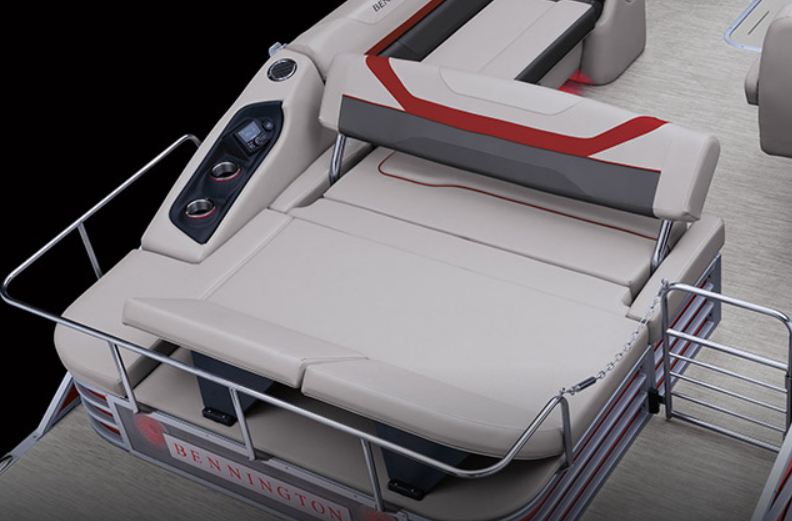
The swingback is basically a “choose-your-own-direction” seat. Flip the backrest and the stern lounge faces forward; flip it again and you’ve got a rear-facing setup. Some versions even let you flatten sections for a sunpad-style sprawl.
Why it saves space: you’re getting two layouts in one footprint, so you don’t need extra furniture to create a rear-facing zone. On smaller decks, that flexibility is a massive win—especially when you want a clear deck for loading, then a cosy lounge once you’re out.
Watch-outs: moving parts mean you should check how the mechanism feels. Does it latch confidently? Can you flip it one-handed? Also check whether the swingback blocks access to the stern ladder or gate when it’s in “lounger” mode.
Best for: multi-use boating, couples who switch between cruising and anchoring, anyone who wants a flexible stern.
4. Fishing Layout
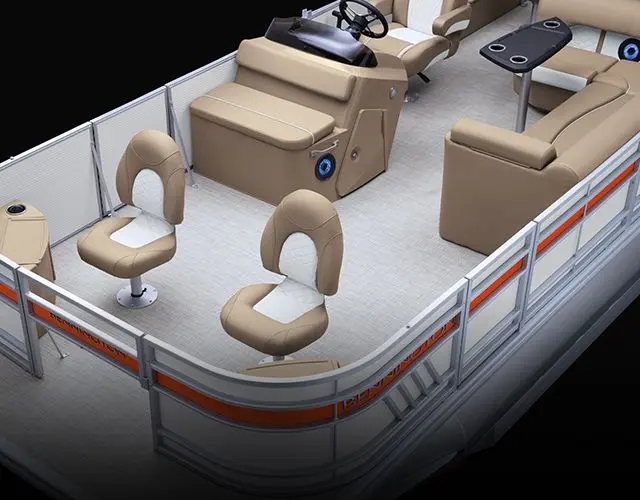
If fishing is genuinely part of your weekly plan (not just “maybe we’ll bring a rod”), look at dedicated pontoon fishing boat layouts. A true fishing pontoon layout usually adds features like fishing chairs, rod storage, a livewell, tackle stations, and open casting space—without sacrificing all the soft seating that keeps non-anglers happy.
Two common styles show up again and again:
- Fish and Cruise: you keep a comfortable lounge zone plus a defined fishing area (often aft or forward).
- Party Fish / Fish-Forward: the deck prioritises open fishing space and utility features, with seating placed to leave “work areas” clear.
Why it saves space: purpose-built fishing furniture is more efficient than “adding fishing stuff later”. Integrated tackle storage and rod lockers stop gear living on the deck. Swivel fishing chairs can also double as extra seating without permanently taking over your walking lanes.
Watch-outs: measure your real kit. If you carry longer rods, check rod locker length and whether it’s actually usable with people sitting nearby. Also consider where you’ll mount electronics and where the landing net will live so it’s not under someone’s knees.
If you’re trying to find the best fishing pontoon layout, aim for a plan that gives anglers a clear zone and gives everyone else a “clean” social zone—so you’re not constantly apologising while you unhook fish.
5. Dual Lounge Layout
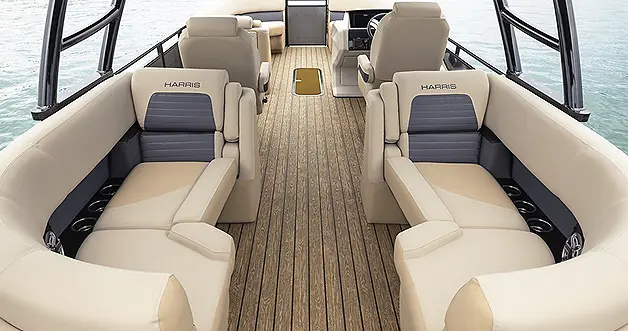
Dual lounge is the “balanced breakfast” of pontoon layouts: lounge up front, lounge at the back, and a sensible walkway between. It’s straightforward, easy to live with, and it usually keeps your deck feeling open because nothing is trying too hard to be clever.
Why it saves space: symmetrical seating tends to create predictable storage (big under-seat cavities) and a clean, consistent walking path. If you’re the kind of person who hates clutter, this layout makes it easier to assign “homes” to everything: inflatables go under bow seats, picnic kit goes aft, safety gear stays near the helm.
Watch-outs: dual lounges can feel less “special” compared to a swingback or entertainer plan. If you entertain a lot, you might miss a built-in table zone or serving station.
Best for: mixed groups, first-time buyers, anyone who values simple movement and big storage.
6. Entertainer Layout
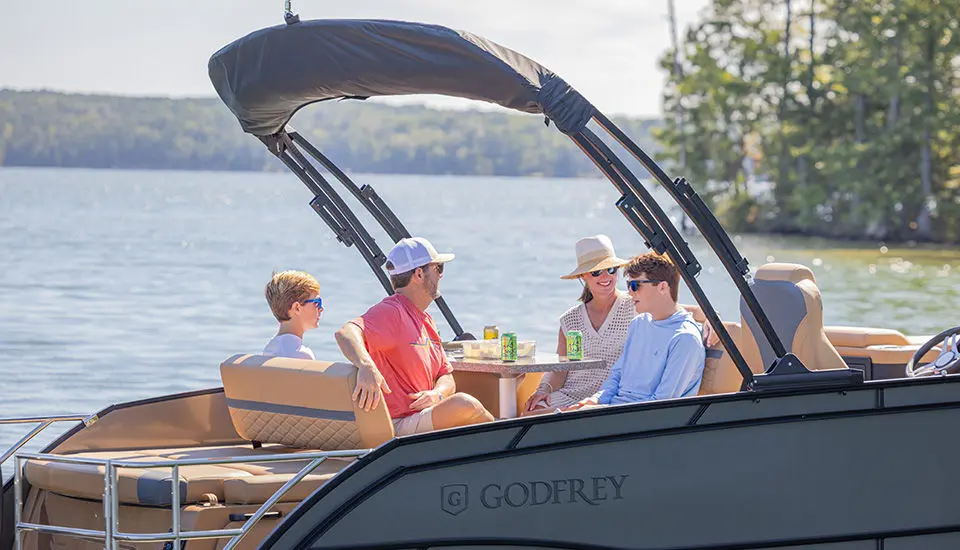
If your perfect day includes snacks, drinks, music, and people drifting in and out of conversations, prioritise an entertainer layout. These plans often add a dedicated serving area (sometimes with a sink), more table space, and seating arranged to face each other naturally instead of everyone sitting in a row.
Why it saves space: a proper entertainer zone reduces “temporary clutter” (coolboxes in walkways, random snack bags on seats). When the plan includes a fixed serving point, you’re less likely to stack everything on the nearest cushion.
Watch-outs: fixed entertaining features can reduce pure seating length. Think honestly about your usual group size. If you often carry a full load of people, check that the seating still supports that without everyone perching on corners.
Best for: hosting friends, raft-ups, slow cruising with food and drinks.
7. Cruise Layout
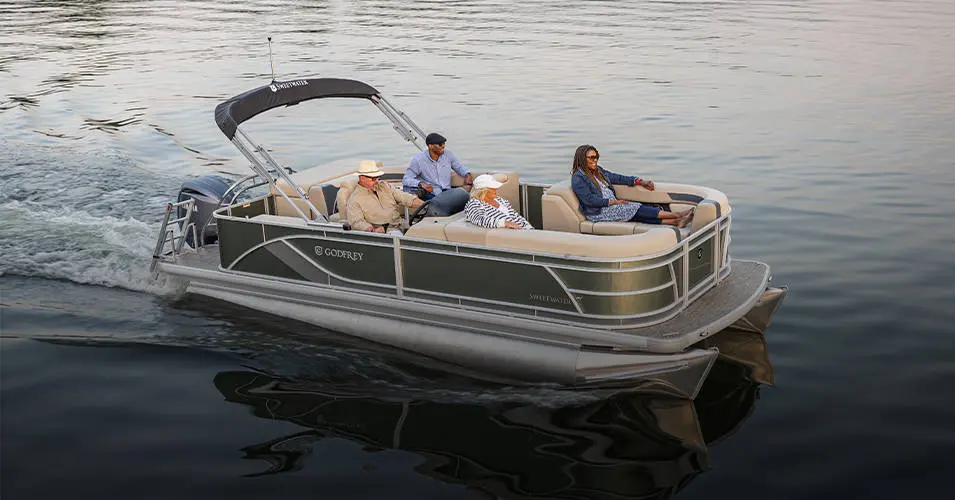
Yes, “cruise layout” sounds like the traditional cruise plan—but in manufacturer language, this often means a floor plan tuned for easy, comfortable travel: a clear helm area, sensible passenger sight lines, and lounge positioning that doesn’t fight the motion of the boat.
Why it saves space: it’s a layout that tends to keep the deck “workable”. You’ll usually see a cleaner centreline pathway, practical storage access near the helm, and fewer awkward pinch points around gates and ladders.
Watch-outs: not every cruise layout is equal. Some are basically “nice seats everywhere” with no thought for where shoes, wet towels, and the folding ladder cover will live. When you study boat floor plans, look for purposeful storage: not just volume, but usable doors and compartments placed where you need them.
Best for: day cruising, sightseeing, couples and families who move around a lot.
8. Cottage Layout
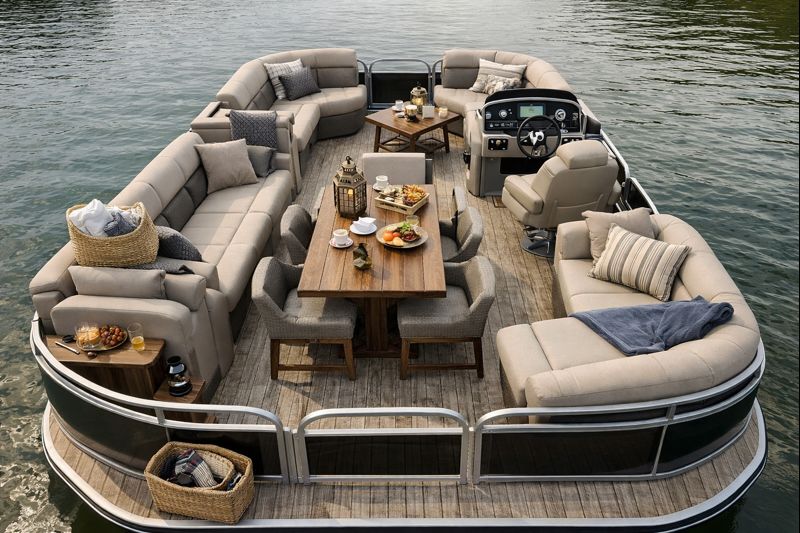
Think “floating living room”. Cottage layouts lean into comfort: deeper seating, conversation groupings, and often more “house-like” features such as bigger tables, plush lounges, and a strong emphasis on being at anchor or drifting rather than constantly underway.
Why it saves space: cottage layouts often use furniture that serves multiple functions—like lounges that convert to a sunpad, or a dining area that folds down. If you’re mostly stationary on the water, the “right” furniture can replace several separate pieces.
Watch-outs: heavier, plusher setups can tempt you to overload the boat with people and gear because it feels like you’ve got room for everyone. Always respect the capacity information on your boat’s plate and treat it as a safety boundary, not a suggestion.
9. Single Rear-Facing Lounger with Dual Helm Seats (SLDH–ELECTRIC)
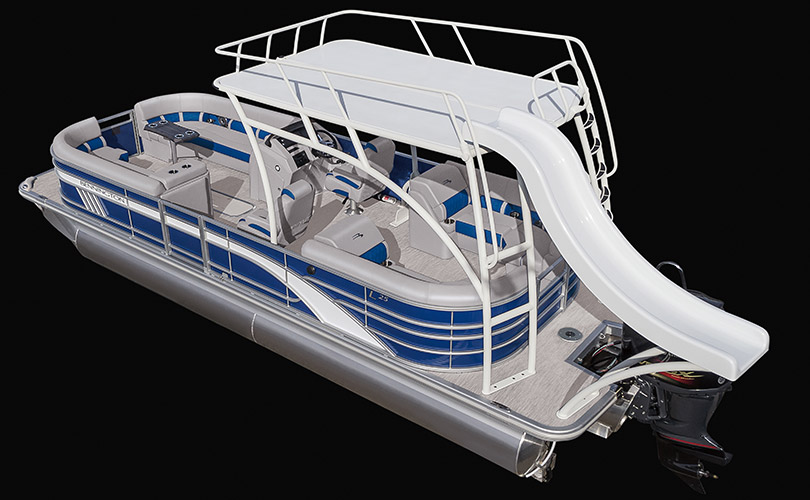
This layout breaks away from the usual “more sofas everywhere” thinking. The SLDH–ELECTRIC setup pairs dual helm seats with a single rear-facing lounger, creating a clear distinction between driving, social seating, and quiet relaxation.
The dual helm seats are designed for a captain and co-captain setup. This sounds minor, but in practice it changes how the boat is used. Instead of one person driving while everyone else sits elsewhere, two people can share navigation, spot wildlife, or simply talk while underway. It feels more like piloting together than chauffeuring guests.
The rear-facing lounger serves a different purpose from a full quad lounger system. Rather than turning the stern into another social zone, it becomes a calm observation spot—ideal for birdwatching, photography, or watching the shoreline drift by. This works especially well on smaller lakes where speed is secondary to atmosphere.
Paired with a quiet Mercury Avator Electric Engine, this layout really comes into its own. With no engine noise or vibration, the rear lounger becomes a genuine “listening seat”—you hear water movement, wind in the trees, and wildlife instead of exhaust notes. That’s something traditional layouts simply don’t optimise for.
This configuration is typically offered on models like the Cruiser 210, where deck length is limited and every seat has to justify its footprint. Instead of squeezing in more furniture, the SLDH–ELECTRIC layout focuses on intention: fewer seats, better experience.
Best for: quiet lakes, electric propulsion, couples or small crews who value shared piloting and nature-focused cruising.
10. Journey Layout (Long-Run, Gear-Friendly Configuration)
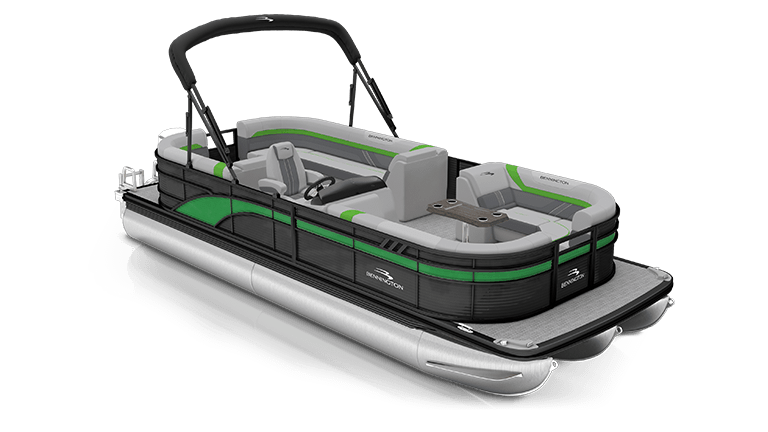
Journey layouts aren’t about lounging density or party flow—they’re about reducing friction over time. Everything is arranged to make repeated movement easy: boarding, docking, anchoring, accessing gear, and stepping on and off throughout the day.
Instead of anchoring seating around conversation clusters, Journey layouts prioritise logical circulation paths. You’ll often notice wider centre walkways, clearer lines from gate to helm, and storage placed exactly where it’s needed—lines near boarding points, safety gear near the helm, and bulky items kept low and accessible.
What makes this layout feel different from a standard cruise plan is how it handles “in-between moments”. Think refuelling stops, swimming breaks, short dock visits, or moving through locks and marinas. You’re not constantly asking people to stand up, shuffle cushions, or relocate bags just to do something basic.
Journey layouts also tend to pair well with owners who carry more equipment than passengers: spare anchors, extra lines, fishing gear, folding bikes, or overnight kits. The deck stays usable because items have defined zones rather than migrating into seating areas.
This layout shines on longer day trips where efficiency matters more than novelty. Over several hours, small improvements in access and flow add up to a noticeably calmer experience—especially when the boat is fully loaded.
Best for: frequent stops, longer cruising days, gear-heavy trips, owners who value function over spectacle.
Choosing the Right Pontoon Boat Layout for Your Needs
The smartest way to choose is to start with your real day, not your “best case fantasy” day. Write down your most common trip in plain terms: who’s coming, what you’re doing, what gear you bring, and what usually annoys you on a boat. Then use that to filter layouts.
Family vs Fishing Use
If you’re mostly cruising with family, prioritise soft seating, safe movement, and easy storage for towels, toys, and snacks. A traditional cruise or dual lounge setup usually keeps everyone comfortable without making the boat feel busy.
If fishing is a core activity, consider true pontoon fishing boat layouts rather than “we’ll add fishing later”. Built-in rod storage, a livewell, and dedicated swivel chairs keep the deck usable and stop your fishing pontoon layout turning into a tripping hazard.
Storage and Gear Considerations
Storage isn’t just litres and compartments—it’s access. Ask yourself: can you reach the anchor, the first aid kit, and spare lines without asking three people to stand up? Do seat bases open easily? Are there long lockers for awkward items like skis, longer rods, or a folding deck chair?
If you’re choosing between layouts, pick the one that puts “grab-it-fast” storage near where you use it. For example, fishing gear should be reachable from the fishing zone, not buried under the bow lounge where everyone is sunbathing.
Entertaining vs Relaxing Focus
Entertaining needs surfaces and circulation: tables, cupholders, and a place to serve food without it becoming a balancing act. Relaxing needs posture options: a place to stretch out, a place to sit upright, and a place to face the water rather than the console.
If you’re split between the two, a swingback or flex layout often gives you the best compromise—because you can “set” the boat for the day without buying a completely different floorplan.
Quick Comparison Table: Which Layout Fits Your Day?
This table is a practical shortcut when you’re scanning listings and comparing boat floor plans. Use it to narrow your shortlist, then dive into the specific floorplan drawings.
| Layout idea | Best for | Space-saving advantage | Common compromise |
|---|---|---|---|
| Traditional cruise (L-shape) | Families, casual cruising | High seating density | Corner can pinch walkway |
| Quad lounger / rear-facing | Lounging, social days | Defined zones reduce traffic chaos | Some storage becomes shorter |
| Rear lounger / swingback | Multi-use, sunset anchoring | Two seating directions, one footprint | Mechanism and access checks needed |
| Fishing (fish & cruise / party fish) | Anglers plus family | Gear integrated, deck stays clear | Less “sofa-only” lounging space |
| Dual lounge | All-round use | Simple walkways and big storage | Less specialised entertaining features |
| Entertainer | Hosting, raft-ups | Built-in surfaces reduce clutter | Can reduce total seating length |
| Cruise (practical travel) | Day trips, moving often | Clean circulation and access | Depends heavily on specific floorplan |
| Cottage | Anchoring, comfort | Multi-function lounging areas | Can tempt overloading with gear |
| Flex | Changing activities | Neutral zones adapt quickly | You must actually reconfigure it |
| Journey | Longer outings, practical owners | Traffic flow makes the deck feel bigger | Needs smart storage planning |
Source: Layout descriptions and floorplan concepts drawn from manufacturer guidance and layout explainers by Harris, Bennington, and Godfrey.
Tips for Maximising Space on Your Pontoon Boat
Even the best pontoon boat layout ideas won’t shine if the deck becomes a dumping ground. These are the practical habits (and small upgrades) that keep your pontoon feeling bigger, trip after trip.
Create “deck rules” for traffic flow
Pick one main path and keep it clear. On most pontoons, that’s the centreline walkway or the route from gate to helm to stern ladder. If you set one simple rule—“nothing lives on the walkway”—you’ll instantly feel the layout working better.
Use storage like a checklist, not a black hole
Under-seat storage is brilliant, but only if you can find things quickly. Group items by when you use them (launch, cruising, swimming, fishing, packing up). The goal is fewer “full-deck searches” that make everyone stand up and shuffle.
Plan for wet and messy gear
Wet towels, muddy shoes, and fish slime are what make a pontoon feel cramped fast. Consider a small designated wet zone near a gate or ladder: a lidded bin, a mat, and a dedicated bag for damp stuff. This is unglamorous, but it’s a space saver in real life.
Think in dimensions when you shop listings
Many pontoons in the common family size range have deck widths around 8 ft 6 in (2.59 m), which affects how wide your walkway can realistically be once furniture is installed. When you compare boat floor plans, pay attention to deck width and how much the seating “intrudes” into the walking space.
Space-Saving Upgrades by Zone
If you want the deck to feel bigger without changing boats, target upgrades that reduce loose items on seats and floors.
| Zone | Upgrade | What it fixes | Who benefits most |
|---|---|---|---|
| Bow lounge | Removable table + under-seat organisers | Snacks and small items spreading everywhere | Families, entertaining |
| Helm area | Dedicated “quick access” locker plan | Safety kit and lines buried under cushions | Everyone (especially the skipper) |
| Stern | Swingback or rear-facing lounge zone | People congregating in the walkway to watch the water | Sunset cruisers, swimmers |
| Fishing corners | Rod holders + tackle station | Rods and tackle bags lying on deck | Anglers, mixed-use crews |
Source: Fishing storage and layout features commonly highlighted in manufacturer fishing layouts (Bennington, Harris, and Godfrey).
Fishing-Focused Features to Look For in Pontoon Fishing Boat Layouts
If you’re serious about angling, the layout is only half the story. The “fishing package” details are what turn a pontoon into a platform that actually works: rod storage, livewell placement, and where you can stand without stepping over a lounge corner.
| Feature | Why it matters | Where it works best | Layout types |
|---|---|---|---|
| Locking rod locker | Keeps rods safe and off the deck | Along a stern side panel | Fish & cruise, party fish |
| Livewell | Healthy bait, less mess in buckets | Near fishing chairs | Dedicated fishing layouts |
| Tackle station | Stops tackle bags taking over seating | Midship or stern utility console | Fishing and flex layouts |
| Swivel fishing chairs | Comfort for anglers, doubles as seating | Stern corners or forward casting zone | Most fishing pontoon layouts |
Source: Fishing layout feature lists and floorplan descriptions commonly presented by Godfrey and Harris.
Conclusion
The best layout isn’t the fanciest—it’s the one that matches how you actually boat. If you start with your real routine (people, gear, and what annoys you), the right floorplan becomes obvious fast, and your pontoon instantly feels bigger and easier to live with.
Use these ten pontoon boat layout ideas as your shortlist tool, then compare real boat floor plans side by side. When the walkway is clean, storage is accessible, and your “zones” make sense, your deck stops feeling busy—no matter how many people come along.
Read More: Small Yacht Interior Design Ideas: Top 10 Tips for 2026
FAQ
What is the best pontoon fishing layout?
The best fishing pontoon layout is usually one that gives anglers a defined fishing zone (with swivel chairs, rod storage, and a tackle station) while still keeping a comfortable lounge zone for everyone else. “Fish and cruise” layouts are a common sweet spot because they avoid turning the whole boat into a utility platform.
How do pontoon floor plans affect comfort and storage?
Boat floor plans decide where you can walk, where people naturally sit, and whether storage is easy to access without disrupting everyone. Two layouts can have similar seating counts, but the one with clearer traffic flow and better-placed storage will feel calmer, roomier, and easier to manage.
Can I customize my pontoon boat layout after purchase?
You can often customise smaller parts—tables, seat modules, fishing chairs, storage organisers, and accessories—but changing the entire layout is usually expensive and limited by how the deck, fences, and furniture bases are built. If you think your needs may change, a swingback or flex-style plan is a safer bet because it adapts without a full rebuild.
Which layout is best for entertaining guests?
An entertainer layout is typically the easiest for hosting because it gives you surfaces and serving space, and it encourages face-to-face seating. If you host casually (rather than every trip), a traditional cruise plan with a smart table setup can still work well—just make sure the walkway stays clear when everyone’s moving around.
Are L-shaped layouts better than dual lounges?
They’re better for different personalities. L-shaped cruise seating can feel more social and space-efficient, especially if you like everyone in one conversation area. Dual lounges often win for simplicity and storage, and they usually keep movement straightforward when the boat is busy. If you’re undecided, pick the one with the cleaner walkway and the storage you’ll actually use.
References
Bennington Marine. (n.d.). Fishing pontoon boat layouts. https://www.benningtonmarine.com/en-us/pontoon-boat-layouts/fishing/
Bennington Marine. (n.d.). Swingback pontoon layouts. https://www.benningtonmarine.com/en-us/pontoon-boat-layouts/swingback/
Boat Ed. (n.d.). How to calculate boat capacity (and why it’s important). https://www.boat-ed.com/blog/how-to-calculate-boat-capacity/
Harris Boats. (n.d.). Pontoon boat layouts and floor plans. https://www.harrisboats.com/tips-tricks-news/pontoon-boat-layouts-and-floor-plans.html
U.S. Government Publishing Office. (n.d.). 33 CFR Part 183 — Boats and associated equipment. https://www.ecfr.gov/current/title-33/chapter-I/subchapter-S/part-183