What Angle Should You Hit a Wave to Avoid Swamping? A Complete Guide to Avoid Swamping Your Boat
If you’ve ever felt a wave slam into the hull and watched water pour over the gunwale, you already understand how quickly boat swamping can happen — especially when boating in rough seas. In most small boats, avoiding swamping is not about power or bravery, but about wave angle. So, knowing the best angle to hit a wave is one of the most important skills in boat handling in rough water.
This guide shows you the best angle to hit a wave in most small-boat situations and the practical “how to hit a wave” technique that stops your cockpit from becoming a paddling pool.
Understanding Swamping: What It Is and Why It Happens
What is Swamping
Swamping is when water comes aboard faster than it can get out, so the boat loses buoyancy, stability, and freeboard (that precious height between the waterline and the top edge of the hull). It’s different from “taking a splash”: swamping is when the water load becomes a stability problem. A single steep wake, a breaking wave, or even a badly timed turn can dump more water than you expect — especially if your boat is low in the water because of load, trim, or design.
Some small craft are designed to float when swamped (through built-in flotation), but that does not mean they’ll be controllable, comfortable, or safe in open water once flooded.
Hazards of a Swamped Boat
In rough conditions, poor wave angle and incorrect boat handling in rough water are among the most common causes of sudden boat swamping. Water is heavy, and once it’s inside the boat it:
Raises the risk of capsize by sloshing side-to-side and shifting the centre of gravity.
Reduces freeboard, so the next wave has an easier path in (a nasty feedback loop).
Hurts manoeuvrability, because the hull shape and prop immersion change and the boat becomes sluggish to respond.
Creates a “panic spiral” where rushed throttle and steering inputs put you side-on to waves at the worst moment.
Even when flotation keeps the hull from sinking, the practical hazard can be loss of control and exposure.
Factors That Influence Swamping Risk
Overloading and Weight Distribution
If you only fix one thing, fix this: most swamping stories start with “we were a bit loaded up…” Overloading reduces freeboard and makes your boat easier to flood with smaller waves or wakes. It also changes how the hull meets waves, making the bow more likely to bury or the stern more likely to squat and let water roll in from astern.
Capacity guidance varies by country, but the principle is universal: a boat’s safe carrying limit isn’t “how many seats you’ve got”, it’s how much mass the hull can carry while still retaining stability and freeboard. Capacity relates to the combined weight of people, fuel, and gear — and the hull’s characteristics matter.
Distribution matters as much as total weight:
Keep heavy items low (batteries, coolboxes, spare fuel) to reduce rolling.
Keep weight central to reduce “list” and stop one gunwale sitting closer to the water.
Avoid crowding the stern in following seas; a stern-heavy boat is more likely to take water over the transom.
A simple self-check before you even leave the berth: if the boat feels “tippy”, sits unusually low, or drains/scuppers are flirting with the waterline, treat that as your warning sign, not a quirky personality trait.
Boat Type and Design Considerations that Prevent Swamping
The best angle to hit a wave is not identical for every hull. Design changes how your boat responds:
Deep-V hulls tend to cut waves more comfortably, but can lean and “trip” if you let them go beam-on to steep waves.
Flat-bottom and shallow-V craft can pound hard head-on, which tempts people to turn side-on for comfort — exactly the move that can invite a roll and a flood.
RIBs often have excellent buoyancy and forgiveness, but they can still be swamped if overloaded, trimmed badly, or driven too fast into steep chop.
Open boats (skiffs, open runabouts) have less reserve buoyancy if water gets aboard, so prevention matters even more.
Drainage matters too. Self-bailing cockpits, working bilge pumps, and clear freeing ports buy you time. Blocked drains take that time away.
Weather and Water Conditions
Sea state is the multiplier. A perfectly fine loading and trim setup in sheltered water can become sketchy in short, steep chop. The Royal Yachting Association (RYA) notes the risk of burying the bow when running down steep swells and advises not to overtake steep or breaking waves.
Also, remember that “waves” aren’t just wind waves:
Wakes from larger vessels can be steep and unpredictable near harbours and channels.
Overfalls (tide against wind, or tide over shallow ground) can create abrupt, breaking water.
Cross seas (waves from different directions) can catch you mid-turn — and that’s when angle discipline really matters.
Best Angle to Hit a Wave: How a 45-Degree Wave Angle Prevents Boat Swamping in Rough Seas
Why Hitting Waves at a 45° Angle Works Best
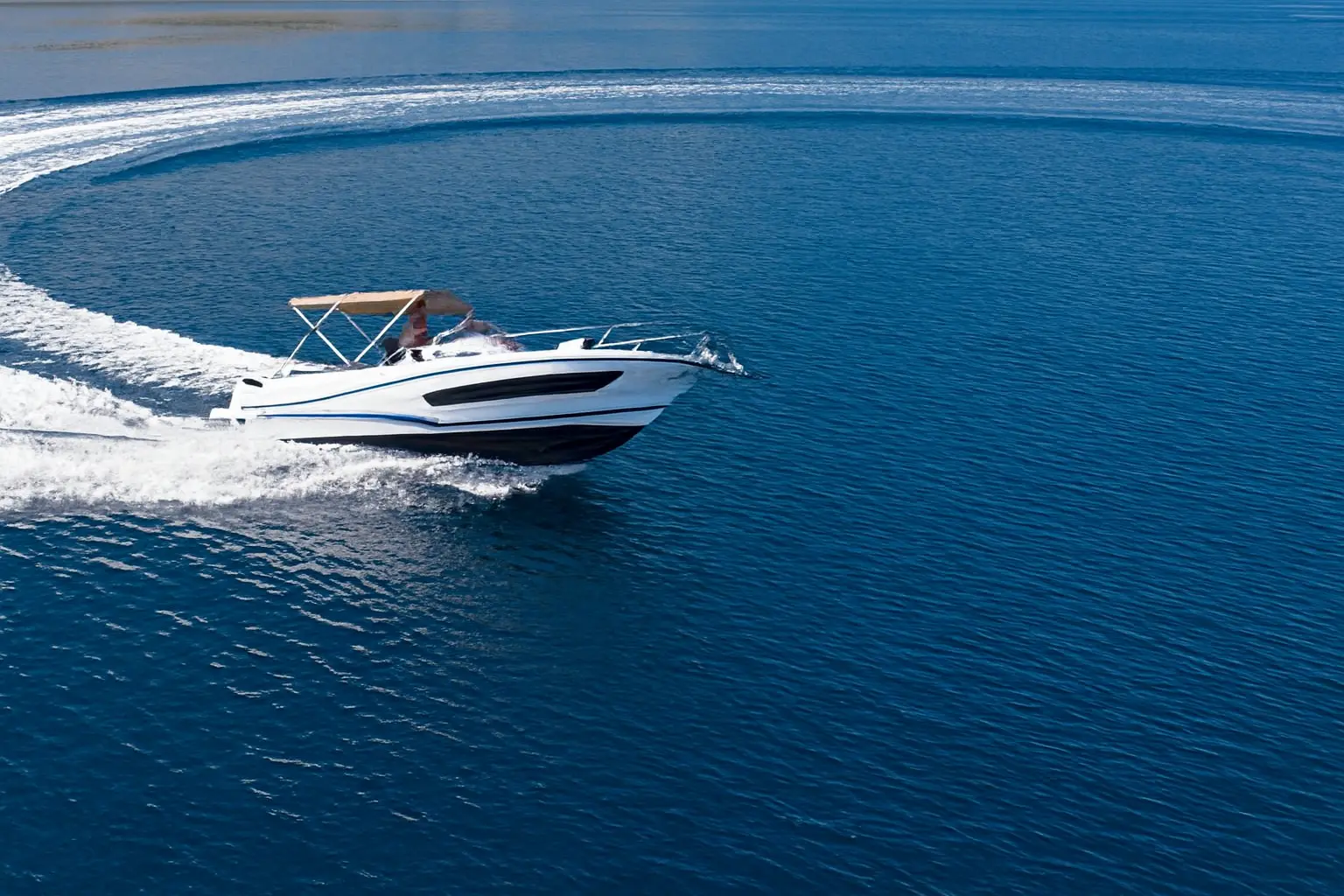
If you’re looking for a simple rule you can actually remember when the wind pipes up, it’s this: don’t take waves dead ahead, and don’t let them hit you dead on the beam. In many small-boat situations, the sweet spot is a 45-degree angle (give or take) to the wave direction.
Why does it work? Because it balances two risks:
Head-on risk: you can bury the bow in a steep wave (especially if you’re too fast or trimmed down), shipping water forward.
Beam-on risk: you maximise roll, and a breaking wave can knock you over or dump water straight into the cockpit.
At roughly 45°, the hull can ride up and over the wave face while the boat keeps forward motion and steering authority.
Here’s the practical “how to hit a wave” method that makes the 45° rule real on the water:
Pick your target wave: don’t stare at the bow; look past it and decide which wave you’re going to meet, not the one you wish you’d met.
Set a controlled speed: enough to keep steerage, not so much that you launch or stuff the bow. “Safe speed” is the right speed.
Quarter the seas: turn so you meet the wave at about 30–45° off the bow. If the sea is very steep, bias closer to 30°; if it’s longer period, you may sit closer to 45°.
Time the throttle: ease off just before the bow climbs the wave (reduce impact), then add a touch of power as you crest to keep the bow from falling hard into the trough.
Repeat as a zig-zag: if you need to travel upwind or into waves, you often make better progress by tacking across the wave direction rather than punching straight through.
Learning how to hit a wave at a 45-degree angle improves control, reduces impact, and dramatically lowers the risk of boat swamping during boating in rough seas.
Scenario
Recommended approach angle
Throttle & trim hint
Source
Short, steep chop (wind against tide, harbour entrances)
~30–45° off the bow; avoid beam-on
Reduce speed before the crest; avoid launching; keep steerage
RYA guidance on steep swells and safe handling
Moderate head seas (steady wind waves)
~45° (quartering) with a controlled zig-zag
Use small throttle changes to soften impacts; keep the bow supported
BoatUS rough-weather study guidance
Large following seas (running downwind)
Avoid overtaking steep swells; keep bow supported
Proceed gradually; don’t rush down the face of a wave
RYA warning about overtaking steep swells
Cross seas (waves from two directions)
Prioritise avoiding beam-on to the steepest set
Slow down; make deliberate turns; keep crew weight centred
Head-on can feel “brave” and direct, but it’s often where boats get wet. If you meet a steep wave with too much speed, the bow can punch in, bury, and then the next wave arrives while your foredeck is still low — hello, cockpit waterfall.
Side-on (beam-on) is where roll and capsize risk climbs. Even if you don’t capsize, a breaking wave on the beam can dump a huge volume of water aboard in one hit. The dangerous part is that beam-on often happens during turns, when people panic and “crank it” — exactly when you have the least stability margin.
So think of the 45° rule as a stability bargain: you accept a little extra distance and a bit of zig-zag steering in exchange for keeping the boat upright and the cockpit dry.
Common Mistakes of a Swamped Boat
Overloading the Boat Beyond Swamped Capacity
Overloading is more than “the boat feels heavy”. It can push you into a zone where one or two waves are enough to overwhelm you. Boat safety education materials consistently list overloading and poor weight distribution as common causes of swamping.
Two practical mistakes show up again and again:
Underestimating gear weight: fuel, anchors, batteries, fishing kit, coolers, and “just in case” bags add up fast.
Stacking weight high: high loads (on seats, on deck, in tall lockers) raise the centre of gravity and make roll more violent.
If you want a blunt rule: water is not your only enemy — weight is. Every kilogram you don’t need is extra freeboard you get to keep.
Ignoring Wave Direction and Wind Conditions
People get fixated on the destination and forget the sea has a direction. But the sea always votes. If the wind and waves are building, your plan needs to include: “How will I meet the waves on the way home?”
Use a simple loop in your head:
Where are the waves coming from?
What is the steepest water near me? (channels, headlands, shallow bars)
What heading lets me meet them safely? (often quartering, not straight in)
Weather-and-wave resources aimed at small craft stress planning, conditions awareness, and the risks created by wave shape and direction — not just wind strength.
Panicking During Rough Water Maneuvers
Panic turns smooth mistakes into sharp ones. The classic sequence is:
Boat takes water → skipper adds lots of throttle → bow lifts, stern squats → more water rolls in from astern.
Boat takes a hit → skipper turns hard → boat goes beam-on → roll increases → wave dumps in.
Common mistake
What it looks like on the water
Better move
Loading “by feel” instead of by limits
Boat sits low; sluggish; spray becomes shipped water
Respect carrying limits; keep weight low/central
Punching straight into steep chop
Pounding; bow stuffs; water over foredeck
Quarter the waves; reduce speed; avoid burying the bow
Letting waves hit you beam-on mid-turn
Sudden roll; crew weight shifts; water comes over the side
Slow down before turning; turn in a lull; keep crew centred
Trying to “outrun” following seas
Boat slides down wave face; bow digs; broach risk
Don’t overtake steep swells; proceed gradually
Tips for Avoiding Swamping on Rough and Cold Water
Rough water is one thing; rough and cold is another. Cold turns minor incidents into major ones because you have less time and less dexterity to fix problems. So you want a layered approach: prevent water coming in, keep the boat controllable, and keep people protected if you still get wet.
1) Do a “freeboard reality check” before you go.
Stand back and look at your boat loaded exactly as you’ll run it. If it looks low, it is low. If you’re unsure, reduce payload. Capacity guidance from boating safety organisations consistently emphasises that overloading and poor distribution are key risk factors.
2) Set the cockpit up to stay dry.
Clear drains and scuppers before leaving.
Check the bilge pump works (and that the outlet isn’t blocked).
Stow loose kit so it can’t slide and shift weight in a roll.
3) Commit to the angle early.
If you wait until the last second to choose your approach, you’ll end up beam-on during a rushed turn. Pick your line early and hold it.
4) Use “soft hands” on the controls.
In chop, aggressive throttle makes the boat alternately climb and fall. Your goal is to keep the bow supported by water, not by hope. If you feel repeated slamming, reduce speed, adjust your line, and let the hull work.
5) Keep people warm and wearable.
Cold-water planning isn’t just a survival suit conversation. It’s gloves, proper layers, and — crucially — wearing lifejackets. The RNLI’s safety guidance for yacht sailing and motorboating repeatedly emphasises preparedness and personal safety equipment.
6) Have a “plan B heading”.
Before you’re committed, identify a sheltered lee, a harbour entrance, or even just a heading that puts the sea on your bow quarter rather than directly astern. You want options while you still have daylight, fuel, and calm brains.
If water is coming aboard, your job is to stop the inflow, keep the boat stable, and buy time. The worst emergency plan is “do everything at once”. Here’s a calmer ladder you can actually follow.
Step
What you do
Why it matters
1
Get everyone in lifejackets; keep weight low and centred
Stability first; prevents a fall overboard becoming a second emergency
2
Turn to quarter the seas (~45°) and reduce to a controllable speed
Reduces water coming in; maintains steering authority
Water weight compounds quickly; early removal is easiest removal
4
If engine power is lost and you’re drifting into danger, anchor from the bow (never the stern)
Helps keep bow into waves; stern anchoring can lead to swamping
Step 1: Stabilise people and the boat.
Tell everyone (calmly) to sit low, hold on, and stay central. If people bunch on one side to “see what’s happening”, your freeboard disappears exactly where you need it most. If lifejackets aren’t on, get them on now — before someone has to move forward or lean over a gunwale.
Step 2: Change your angle, then your speed.
If you’re taking water, your first control is heading. Turn so you meet the waves on the bow quarter (often around 45°), then settle into a speed that keeps steerage without launching or burying the bow. BoatUS summarises this kind of rough-water approach advice directly.
Step 3: Start removing water immediately.
Don’t wait until “it gets worse”. It already is worse. Get the bilge pump running and have a bucket/bailer in play. Even if you can’t fully win yet, slowing the accumulation buys you decision time.
Step 4: Stop the easy inflow sources.
Check obvious culprits fast: a missing drain plug, a hatch left open, a cooler lid acting like a scoop, a backed-up scupper. If you can block a stream with a towel or spare clothing, do it. This isn’t pretty; it’s effective.
Step 5: Decide: run for shelter, hold position, or call for help.
If you can make safe progress, steer towards shelter while maintaining your safest wave angle. If you cannot control the boat or the water level is rising, treat it as a mayday situation and contact emergency services using the communication equipment available to you.
Step 6: If you must anchor in an emergency, do it correctly.
Anchoring can prevent you being blown onto hazards, but the key point is direction: anchor from the bow. Safety education materials warn that anchoring from the stern can cause swamping because waves can more easily board over the transom.
Summary & Key Takeaways:How to Keep Your Boat Safe from Swamping
When it comes to boat swamping, the most effective defence is correct wave angle. In most small-boat situations, the best angle to hit a wave is a controlled 45-degree angle.
Pair that with sensible loading, central weight, and calm control inputs, and you dramatically cut your chances of a swamped boat. When things do go wrong, stabilise people first, quarter the seas, and start removing water immediately.
Don’t overload: reduced freeboard makes every wave bigger.
Quarter waves: avoid head-on stuffing and beam-on rolling; aim around 30–45° where practical.
Use safe speed: control beats courage.
In an emergency: lifejackets on, keep weight central, pump/bail early, and if anchoring is necessary do it from the bow.
FAQ
1. How should you anchor to avoid capsizing or swamping?
In rough conditions, anchoring is mainly about keeping the bow into the waves and preventing drift into danger — but it has to be done correctly. The core rule is: anchor from the bow, not the stern. Boating safety education materials explicitly warn that anchoring from the stern can lead to swamping because waves can board more easily over the transom, and the engine weight can worsen the problem.
Practically, you want the anchor rode secured to a strong bow point, deployed in a controlled way (lowered, not thrown), and you want to ensure the boat lies in a stable orientation to wind and sea. If conditions are deteriorating quickly, anchoring may not be the best choice unless it prevents a more immediate hazard (like being blown onto rocks). Your safest move is often to seek shelter early, before anchoring becomes a desperation tactic.
2. How do you avoid overloading your vessel?
Start by treating “people + fuel + gear” as one combined payload, not three separate piles. Capacity guidance from boating safety organisations stresses that safe load is about total carried weight and distribution, not how many seats you can physically squeeze into.
Use a simple routine: (1) list your heavy items (fuel, batteries, anchors, coolers), (2) remove non-essentials, (3) stow remaining heavy items low and central, and (4) do a visual freeboard check once loaded. If your boat sits lower than usual or feels tender (tippy), treat that as a real warning. Overloading doesn’t just make the boat slower — it makes it easier to swamp, because the water has less height to climb before it’s inside with you.
3. What causes swamping of a boat?
Swamping is usually a combination of water coming in and water not getting out fast enough. Commonly cited causes include overloading, poor weight distribution, waves and wakes, and bad weather decisions — all of which reduce freeboard and stability.
Specific triggers include: meeting a steep wave head-on at too much speed (burying the bow), turning side-on to breaking waves, running down-sea too aggressively and stuffing the bow, leaving drains blocked, or taking on water through an open hatch or missing drain plug. The reason these causes matter is that once water is aboard, it becomes a shifting weight that can quickly tip the balance from “manageable” to “dangerous”.
4. Is it better to go fast or slow in choppy water?
Neither “fast” nor “slow” is automatically right — controlled is right. You need enough speed to keep steering authority, but not so much that you launch off crests or bury the bow into the next wave. That’s exactly the thinking behind safe-speed rules: speed should match conditions so you can take effective action and stop within an appropriate distance.
In practice, most small boats become safer in chop when you back off from planing speeds, settle the hull, and use throttle timing (ease off before the crest, add a touch over the top) rather than brute force. If the boat is slamming, you’re usually too fast for the wave spacing — or you’re meeting waves at the wrong angle. That’s when a 30–45° approach can feel instantly calmer.
5. How do you avoid swamping?
Think in three layers: load, angle, and preparedness. First, don’t overload and keep weight low and centred — capacity and balance guidance repeatedly connects overloading with swamping and loss of stability.
Second, master “how to hit a wave”: avoid head-on stuffing and beam-on rolling; quarter the waves on the bow at around a 45-degree angle when conditions allow, and zig-zag rather than forcing a direct line.
Third, be ready for the moment you do take water: lifejackets on, bilge pump working, drains clear, and a manual bailer accessible. If water starts coming aboard, stabilise people, quarter the seas, reduce to a controllable speed, and start removing water immediately.