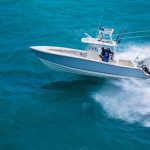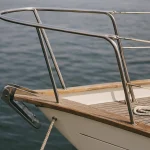
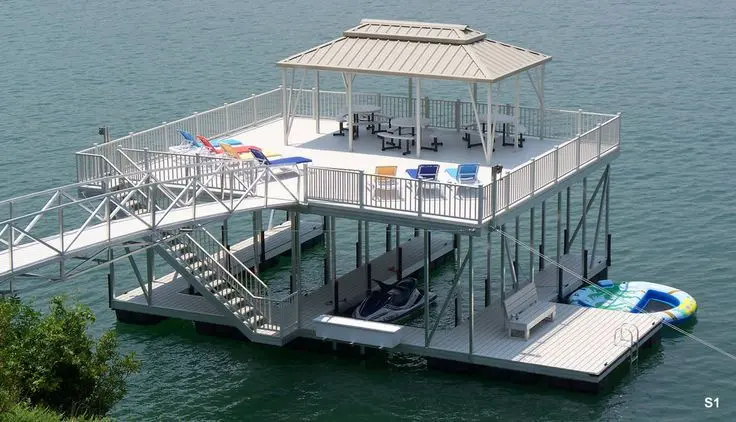
11 Boat Dock Design Ideas for Small Boats & Yachts (2026 Trends)
If you’re shopping for boat dock design ideas, you’re probably balancing two competing goals: you want something that looks great from the house, but you also want something that works every single time you come in hot with a crosswind and a full cooler. The good news is you can absolutely have both, as long as you design around your water conditions, your boat’s size, and how you actually use the dock.
This guide walks you through how to choose a dock layout, then gives you 11 boat dock design ideas across style, structure, and platform shape, and the mistakes that quietly make docks annoying or unsafe.
How to Choose the Right Boat Dock Design
Before you fall in love with a Pinterest photo, get clear on the “boring” stuff that determines whether your dock feels easy. A dock is a system, not a platform. Your shoreline entry, attachments, hardware, bumpers, cleats, and railings all work together, and the weak link is what you notice first.

Start with your “approach story.” How do you usually come in? Do you back in? Do you side tie? Do you arrive with kids who need a stable step? If you’re always landing on the same side because of wind or current, your dock should support that reality with the right shape, cleat spacing, and fender protection.
Then match structure type to water movement. Fixed docks can feel rock-solid in calm water, but they can be awkward where water levels swing. Floating docks can be forgiving in changing water, but they need smart anchoring and a reliable shore connection to avoid “wobble drama.” Shore attachment and anchoring choices matter a lot for long-term stability, especially for floating systems.
Finally, be honest about your safety needs. If you’ve ever carried groceries down a wet dock in flip-flops, you already know: traction and edges matter. If you need boat dock railing ideas, think “where could someone slip or step wrong?” not “how do I decorate the perimeter?”
| Design factor | What you measure | Practical rule of thumb | Why it matters |
|---|---|---|---|
| Dock length vs. boat length | Overall boat length (LOA) | Dock length estimates vary by boat size; many sizing guides publish minimum dock-length ranges by boat length. | Enough room to step off, tie up, and avoid “hanging past” your usable area. |
| Walkway comfort | Clear walking width | Main walkways commonly target at least 4 ft for comfortable passing and carrying gear. | Reduces trips, bumps, and that awkward sideways shuffle. |
| Basic accessibility baseline | Pier width (where accessibility applies) | Accessibility guidance can require a minimum 60 in pier width in some scenarios. | Wider piers feel safer and handle carts, kids, and mobility aids better. |
| Slip clearance | Boat beam + margin | Some slip sizing guidance suggests adding about 1–2 ft beyond the boat’s beam for clearance. | Prevents dock rash and makes docking less stressful in chop. |
Sources: Dock length sizing examples and tables appear in manufacturer sizing guides such as EZ Dock’s dock size guidance.
Read More: 10 Pontoon Boat Layout Ideas for 2026: Smart, Space-Saving Designs
Boat Dock Design Ideas by Style
Style matters more than people admit. Your dock is usually the first thing you see when you look at the water. But the best-looking docks also “feel” good underfoot and have details that make docking calmer. These first four boat dock design ideas lean aesthetic, but every one includes practical moves you’ll appreciate on day three, not just photo day.
1. Modern Boat Dock Design Ideas for Small Boats
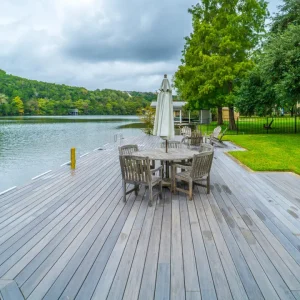
If you want modern boat dock ideas that don’t age badly, go for clean geometry and materials that stay consistent as they weather. Think straight edges, hidden fasteners, and a color palette that won’t fight the shoreline. A modern look is also the easiest to keep tidy because it’s usually less cluttered.
Practical details that keep it feeling modern:
• Low-maintenance decking: Many marine decking guides highlight aluminum and composite as low-maintenance options compared with traditional wood that needs more frequent sealing.
• Integrated bump strips: Instead of random fenders everywhere, add continuous rub-rail style bumpers along the docking edge so your hull “finds” protection automatically.
• Minimalist lighting: Recessed or low-profile fixtures reduce trip hazards and keep the dock from looking like a stadium.
Modern doesn’t mean “cold.” If your dock feels sterile, soften it with one or two intentional elements: a single bench with storage, a dock box with clean lines, or a small planter that doesn’t steal walking space.
Example 1
Example 2
Example 3

2. Rustic & Natural Wood Boat Dock Design Ideas
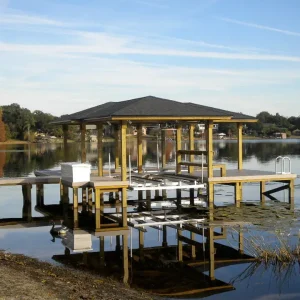
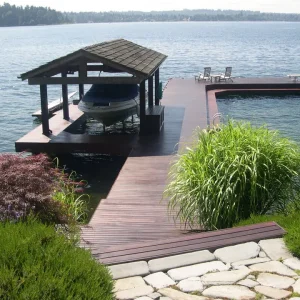
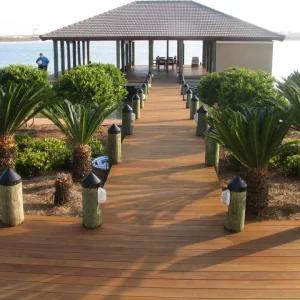
Rustic docks work when you lean into natural variation instead of trying to make wood behave like plastic. If your shoreline is wooded or your property has a cabin vibe, this is where rustic boat dock design ideas shine.
What makes rustic docks look “right”:
• Mixed-width boards or intentional texture: Let the grain show. Rustic looks better with visible character.
• Hardware that fits the story: Choose marine-grade fasteners and brackets, but in finishes that blend with wood tones.
• “Natural” railings: For boat dock railing ideas in a rustic style, cable rail can still work, but so can simple vertical balusters with a chunky top rail that feels sturdy in your hand.
Just don’t pretend rustic means “no maintenance.” Wood in a wet environment is a commitment. If you love the look but hate upkeep, consider a composite deck surface in a wood tone while keeping wood accents for visual warmth. That gives you the rustic vibe without making you sand every year.
Example 1
Example 2
Example 3
Read More: Where Can I Park My Boat for Free in Tennessee?
3. Luxury Boat Dock Design Ideas for Yachts
Luxury docks are less about “expensive stuff” and more about being annoyingly easy to use. A yacht-friendly dock should handle higher freeboard differences, heavier loads, and more frequent guest movement. In practice, luxury boat dock design ideas come down to space planning and confidence features.
Luxury features that actually earn their keep:
• Wider walk zones where people step aboard: Even if your main run is narrow, widen the landing zone near the slip so boarding feels stable.
• Smart cleat placement: Don’t make yourself do gymnastics with spring lines. Place cleats where your hands naturally reach when the boat is in position.
• Shore power and water done cleanly: Concealed runs, weather-protected outlets, and hose management so nobody trips over a coil the size of a python.
• Calm boarding: Good gangway design reduces the “bounce” and awkward angles that make boarding feel sketchy.
Luxury doesn’t have to mean huge. A small dock can feel high-end if it’s uncluttered, stable, well-lit, and designed around how your crew actually moves.
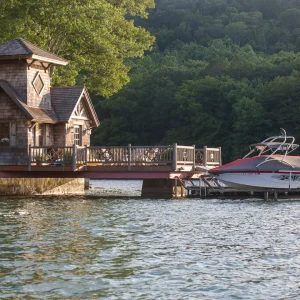
Example 1
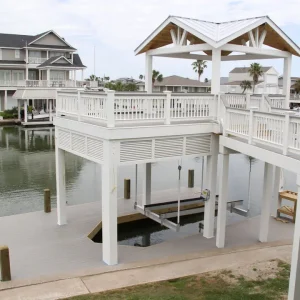
Example 2
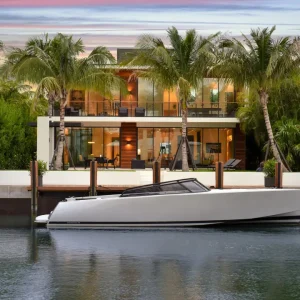
Example 3
4. Coastal & Nautical-Inspired Boat Dock Decorating Ideas
Coastal style is where boat dock decorating ideas can get fun, but you still need to keep the dock functional. The trick is choosing decor that doesn’t become a hazard when it gets wet, windy, or sun-faded.
Safe decorating moves that still look great:
• Color as “wayfinding”: Use one accent color for key spots: the ladder area, the “step-off” zone, or the dock box. It helps at night.
• Rope details with boundaries: Rope-wrapped posts look nautical, but keep rope away from areas where hands slide when you’re carrying gear.
• Marine-grade mats: Add traction at the shoreline transition and at the step-off point where people board.
• A “drop zone”: A small bench or shelf for keys, lines, and sunglasses is both practical and visually tidy.
One more thing: coastal décor looks better when you keep the working parts clean. Fresh lines, organized fenders, and a dock box that isn’t overflowing do more for aesthetics than a thousand anchors painted on signs.

Boat Dock Design Ideas by Structure Type (Functional-Focused)
This is the section where the “it looks nice” conversation meets the “it survives storms” conversation. Structure is what you notice when water levels change, wakes roll through, or the dock gets used hard. If your goal is long-term usability, start here, then circle back to style.
5. Fixed Boat Dock Design Ideas
Fixed docks are the “firm handshake” of docks. They feel stable, they don’t bob underfoot, and they can be great for routine boarding and maintenance. But they’re not a universal solution: if your water level swings a lot, fixed height can become a daily inconvenience.
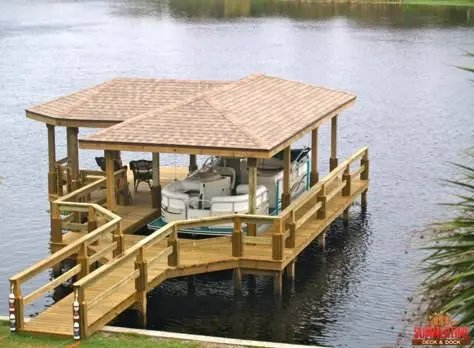
Fixed dock ideas that make life easier:
• Add a lower step platform: A small, lower “landing” helps if the main deck sits high relative to your boat.
• Build in a service edge: A narrow side ledge for fenders and lines keeps the walking path clear.
• Plan for wake energy: Use proper bracing and hardware rated for marine conditions, not just “it worked on my deck.”
If you’re building for small boats, a fixed dock can be perfect in calm lakes or protected coves. If you’re building for yachts, fixed docks can still work, but you’ll want smart boarding solutions and adequate walkway width so the dock doesn’t feel cramped with guests and gear.
6. Floating Boat Dock Design Ideas
Floating docks are the “go with the flow” option. They rise and fall with water levels, which can feel amazing in tidal areas or places with big seasonal swings. This is where diy floating dock ideas and homemade floating dock ideas are common because the installation can be simpler than driving pilings—depending on your shoreline and local rules.
What makes a floating dock feel solid (not like a trampoline):
• The shore connection: A stable hinge or gangway transition is the difference between “nice dock” and “ankle hazard.” Shore attachment methods matter a lot for performance and durability.
• Smart anchoring: Your anchoring system should match your bottom type and wave exposure. “Heavy enough” is not a design spec.
• Gangway design: A well-designed gangway improves access and reduces awkward angles as water levels change.
If you’re tempted by ultra-budget homemade floating dock ideas (like barrel-based flotation), be realistic about long-term performance. Lower-cost flotation can work, but reliability and maintenance vary widely. Cost and quality trade-offs show up fast when hardware loosens, floats degrade, or the dock starts drifting out of square.
Boat Dock Design Ideas by Platform Shape
Platform shape is where docking becomes either calm and predictable or a recurring awkward puzzle. If you want boat dock design ideas that reduce stress, choose a shape that matches your maneuvering space and your most common tie-up style.
7. Straight Boat Dock Design Ideas
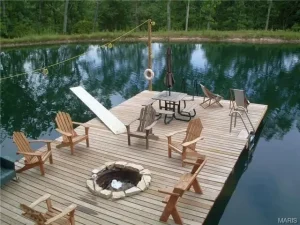
Straight docks are classic for a reason: they’re simple, space-efficient, and easy to expand later. They also work well with both fixed and floating structures.
Make a straight dock feel upgraded:
• Create a “working side” and a “walking side”: Put cleats, bumpers, and utilities on one side so the other side stays clear for people.
• Add a mid-dock tie point: For small boats, one well-placed cleat in the right spot can make solo docking dramatically easier.
• Use consistent edge protection: Straight docks are perfect for continuous bumper rails so your boat always meets a forgiving surface.
If you’re keeping it simple, a straight dock plus good cleat placement and fendering can outperform more complex layouts that look impressive but are annoying to use.
8. L-Shaped Boat Dock Design Ideas
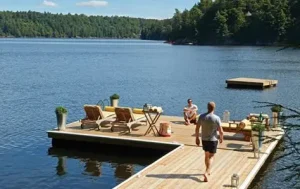
An L-shape is one of the most practical shapes when you want a protected corner and a natural “pocket” for tying up. For small boats, it gives you options: side tie on one leg, bow tie on the other, or a protected corner for boarding.
Why L-shapes feel friendly:
• They create a windbreak effect: Even a small return leg can reduce how much the boat drifts away from the dock during tie-up.
• They support a natural hangout zone: You can keep the “party” area away from the working edge where lines and cleats live.
If you’re browsing boat dock decorating ideas, L-shapes are also great for a tiny seating corner—just don’t place furniture where you need to walk while handling lines.
9. U-Shaped Boat Dock Design Ideas
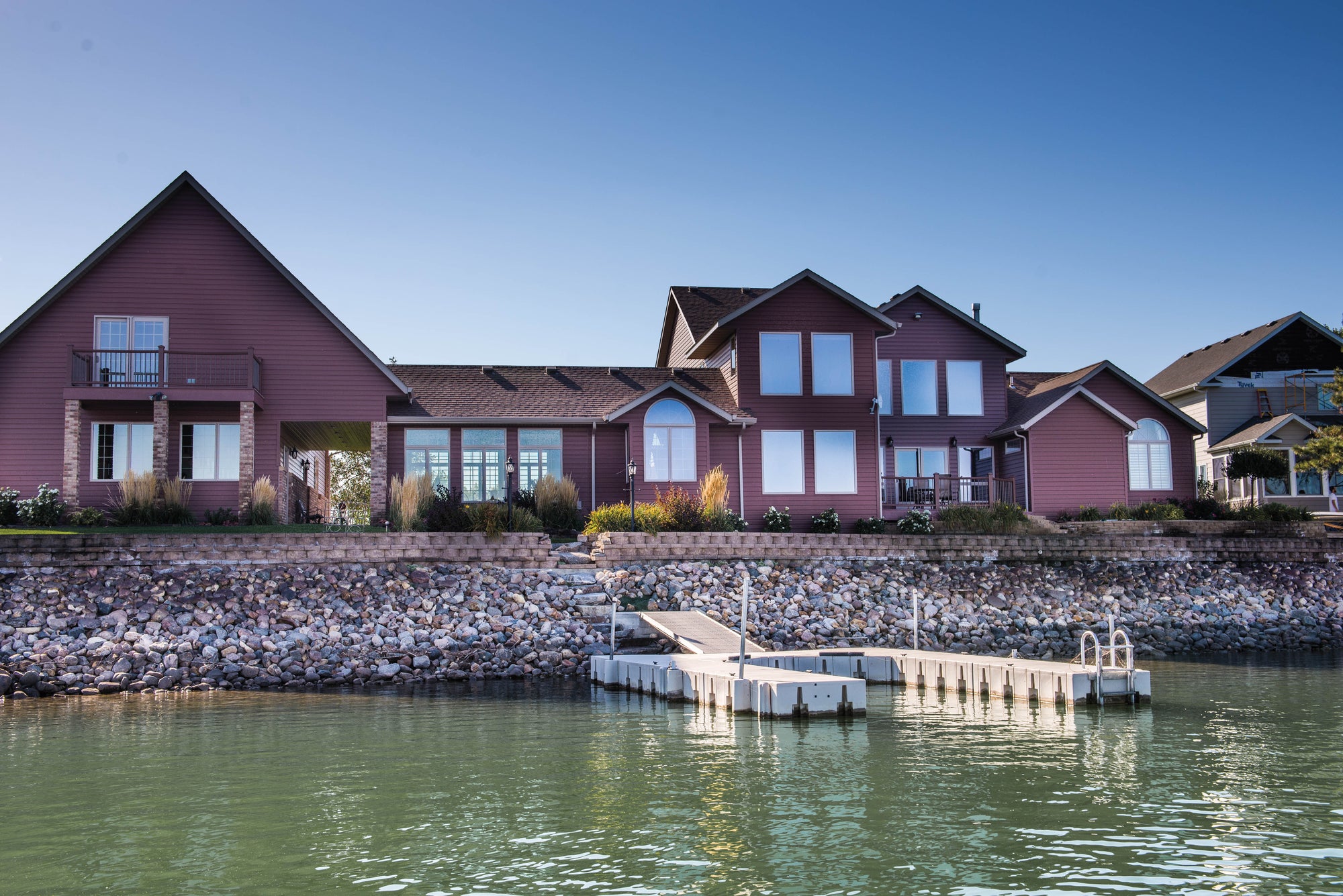
U-shaped docks are a favorite in marinas because they can cradle a boat and make docking feel more controlled. For yachts, they can be particularly appealing when you want stable side access and predictable tie points.
U-shape essentials:
• Clearance matters: Size the “U” so you’re not scraping fenders along the way in. Guidance on slip sizing often emphasizes adding clearance beyond beam to prevent collisions.
• Don’t sacrifice walking space: A U-shape can become cramped if the inside walkways are too narrow, especially when lines cross paths.
• Commit to edge protection: More edges mean more opportunity for rub points. Plan bumpers like you’re planning a route, not like you’re guessing.
If you want a dock that feels “marina-level,” U-shaped layouts are a strong contender—just make sure your site has the room.
10. T-Shaped Boat Dock Design Ideas
T-shaped docks are the multitaskers. The stem gives you access out into deeper water, and the top bar gives you a broad working area for tying up, fishing, or staging gear. If you want boat dock design ideas that serve both docking and leisure, the T-shape is hard to beat.
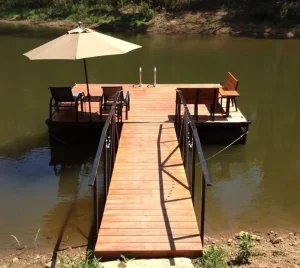
What makes a T-shape work:
• Treat the “top” like a platform: This is where you step aboard, tie lines, and move gear. Make it wide enough to feel stable.
• Separate traffic lanes: Keep the centerline clear so you’re not weaving around dock boxes and chairs.
• Consider rails strategically: If you’re exploring boat dock railing ideas, the T-top is where railings can help most—especially on the ends—because people tend to congregate there. Just keep the boat-side edge functional for lines and fenders.
A T-shape can feel “bigger” than it is because it gives you a real platform without requiring a full pier system.
11. F-shaped Boat Dock Design Ideas
An F-shaped dock is a smart hybrid between a straight pier and a finger-slip layout. It works especially well when you want boat dock design ideas that support side-tying, multiple boats, or frequent coming-and-going without committing to a full marina-style setup.
In simple terms, the “spine” of the F gives you access out to deeper water, while one or two shorter “fingers” create defined tie-up zones. This makes F-shaped docks popular for small marinas, shared waterfronts, and private owners who host guests with boats.
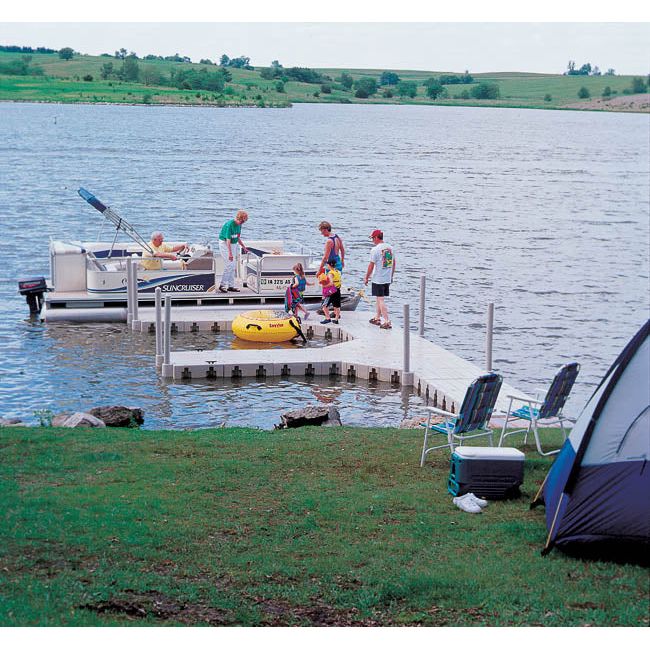
Why F-shaped docks work so well in practice:
• Clear separation of functions: The main walkway stays open for foot traffic, while finger sections handle docking. You’re not constantly stepping over lines or bumpers.
• Easier side access: Side-tying along a finger is calmer and more predictable than bow-only approaches, especially in light wind or current.
• Scalable design: You can start with one finger and add another later if your boating needs grow.
Design tips that prevent clutter and collisions:
• Keep finger widths honest: Narrow fingers save material but feel cramped fast. Make sure there’s enough space to step off safely with gear.
• Plan cleats per finger, not per dock: Each finger should have its own cleats positioned for spring lines and stern lines, not shared awkwardly from the main pier.
• Use continuous edge protection: Fingers create more contact points. Continuous bumpers or rub rails reduce dock rash and make docking less stressful.
From a visual standpoint, F-shaped layouts also work well with restrained boat dock decorating ideas. Because the structure already looks “busy,” simple lighting, clean decking, and minimal furniture keep the dock feeling intentional rather than crowded.
If you regularly host visiting boats, run water taxis, or just want more flexibility without building a full U-shaped system, an F-shaped dock quietly solves a lot of day-to-day problems.
Read More: Small Yacht Interior Design Ideas: Top 10 Tips for 2026
Common Mistakes to Avoid When Planning Boat Dock Designs
Most dock regret is not about the big concept. It’s about the small misses that repeat every weekend. Here are the mistakes I see come up again and again when people plan boat dock design ideas without stress-testing the details.
1) Designing for the “perfect day,” not the worst docking day.
If you only plan around calm water and daylight, you’ll hate your dock during wind, wakes, or night arrivals. Build in bumpers, lighting, and clear tie points so the dock helps you when conditions are messy.
2) Putting decor where your feet and hands need to be.
A lot of boat dock decorating ideas look cute until you’re stepping off with a wet dog and a bag of ice. Keep the working zone clean and decorate the “hangout” zone.
3) Under-building the shore connection on floating docks.
With diy floating dock ideas, people often focus on the platform and forget the transition. Shore attachment methods and gangways are major performance drivers for floating docks.
4) Choosing railings that block docking.
Some boat dock railing ideas make the dock safer for walking but worse for boating if they block line handling or force you to tie at awkward angles. A good compromise is railing on the shore side or at platform ends, leaving the primary docking edge open and functional.
5) Skipping the “permits and permission” step.
Rules vary wildly by location, water body, and ownership. In some places, building in navigable waters can involve local agencies plus regional or national authorities. For example, in the U.S., the Army Corps of Engineers provides guidance on when you may need to obtain permits for work in waters and wetlands. USACE permit guidance Even if your area uses different agencies, the lesson is the same: confirm requirements early so you don’t redesign midstream.
6) Ignoring long-term material and corrosion realities.
Salt, sun, and wet hardware are relentless. If you’re choosing steel components, galvanizing performance and service life vary by environment and exposure. The American Galvanizers Association discusses time-to-first-maintenance based on corrosivity, while other technical resources highlight how coastal exposure can reduce service life if conditions are harsh.
| Material | Typical strengths | Common drawbacks | Best fit |
|---|---|---|---|
| Pressure-treated lumber | Affordable, familiar, easy to repair | Higher maintenance; can splinter/warp; can get slippery with algae | Freshwater, budget builds where you’re OK sealing/maintaining |
| Composite / capped composite | Lower maintenance; consistent look; good durability | Higher upfront cost; heat retention varies by product | Homeowners who want a tidy, modern finish with less upkeep |
| Aluminum decking/components | Low maintenance; corrosion-resistant; stable structure | Upfront cost; can feel “industrial” without design touches | High-traffic docks, minimal-upkeep modern docks |
| Galvanized steel hardware (where used) | Strong, widely available, cost-effective | Coastal/marine exposure can reduce service life; detailing matters | Structural elements when engineered for the exposure level |
Sources: Marine decking overview and material pros/cons from Decks & Docks.
7) Guessing your budget without a realistic cost range.
A dock isn’t just decking and brackets. Costs can include flotation, anchoring, labor, electrical, ladders, edge protection, and permits. Multiple cost guides publish typical ranges by dock type and square footage, and they consistently show big swings based on materials and scope.
| Dock type | Typical cost range | Common cost basis | Notes that change the number fast |
|---|---|---|---|
| Floating dock | $15–$35 per sq ft | Square foot | Flotation type, anchoring, gangway quality |
| General dock build (varies) | $15–$60 per sq ft | Square foot | Material choice, site access, utilities, labor rates |
| Fishing pier (example range) | $100–$300 per linear ft | Linear foot | Depth, structure type, engineered loads |
| Labor share (example heuristic) | About ~50% of budget | Project total | Remote sites, barging materials, engineering |
Sources: HomeGuide publishes cost ranges for docks by square foot and type, including floating dock and fishing pier ranges. HomeGuide cost to build a dock.
Conclusion
The best boat dock design ideas are the ones that make docking feel calmer and walking feel safer, not just the ones that look great in photos. Pick a style you’ll still like after a few seasons, choose a structure type that fits your water movement, and then lock in a platform shape that matches how you actually approach and tie up.
If you only take one thing from this guide, make it this: prioritize your shore connection, your walking path, and your edge protection first—then add the fun boat dock decorating ideas once the dock works like a tool.
Frequently Asked Questions
What is the best boat dock design for small boats?
The best dock design is the one that matches your approach pattern and your water conditions. If water levels change a lot, floating layouts can be easier day-to-day. If your water is calm and stable, a simple straight or L-shaped fixed dock can be extremely easy to use. For most small boats, you’ll get the biggest “quality of life” jump from consistent edge protection, smart cleat placement, and a clean walking path—not from a complicated layout.
Are DIY floating dock ideas safe for long-term use?
Diy floating dock ideas can be safe long-term, but only if the shore connection, anchoring, and materials match your site. The weak points are usually hardware, flotation durability, and movement at the shoreline transition. If your design depends on inexpensive flotation or improvised anchoring, treat it like a short-term experiment and inspect it often. If you want long-term reliability, focus on engineered attachment methods and gangway details, because that’s where many “wobble” issues begin. Floating dock attachment methods
How much does it cost to build a homemade floating dock?
Costs vary a lot based on size, flotation, anchoring, and decking, but published guides commonly place floating dock costs in a wide range. Some cost resources cite floating dock builds around $15–$35 per square foot installed, while DIY-focused estimates can run higher depending on materials and finishing choices. Your fastest way to control cost is to keep the footprint modest, choose a simple shape, and avoid “feature creep” like extra platforms and complex corners.
What materials last longest for modern boat dock designs?
For modern boat dock ideas, people often choose composite decking or aluminum components because they typically require less ongoing sealing than traditional wood and keep a consistent look. If you’re using steel hardware, service life depends heavily on exposure and detailing; galvanizing guidance shows time-to-first-maintenance varies by environment, and coastal exposure can shorten performance if conditions are harsh.
Do I need a permit to build a boat dock?
In many locations, yes—especially if you’re building in or over regulated waterways, wetlands, or navigable waters. The exact requirements depend on where you live and who controls the shoreline and water body. A good general practice is to check local rules first, then confirm whether regional or national agencies are involved. For example, in the U.S., the Army Corps of Engineers provides guidance on permitting pathways for work in waters and wetlands.
References
AccuDock. (2019, September 29). Floating dock attachment methods: A complete guide. AccuDock. https://www.accudock.com/blog/attaching-a-floating-dock-to-shore/
AccuDock. (2022, February 14). Boat dock size guide: Tips for choosing the perfect fit. AccuDock. https://www.accudock.com/blog/how-do-you-determine-the-right-dock-size-for-your-boat/
AccuDock. (2024, February 27). The ultimate guide to boat dock decking: Pros, cons, and top choices. AccuDock. https://www.accudock.com/blog/what-is-the-best-decking-for-a-boat-dock/
American Galvanizers Association. (n.d.). Longevity. Galvanizeit. https://galvanizeit.org/galvanize-it-online-seminar/why-hot-dip-galvanizing/longevity
Dock Gear Supply. (2025, June 5). Dock building costs in 2025: Full price breakdown guide. Dock Gear Supply. https://www.dockgearsupply.com/blog/2025/06/05/how-much-does-it-cost-to-build-a-dock/
EZ Dock. (2025, September 1). Boat dock size guide: How to choose the right size. EZ Dock. https://www.ez-dock.com/blog/boat-dock-size-guide/
EZ Docks. (n.d.). How to design a gangway for your waterfront. EZ Docks. https://ez-docks.com/blog/gangway-design/
HomeAdvisor. (2025, June 24). How much does building a dock cost in 2025? HomeAdvisor. https://www.homeadvisor.com/cost/outdoor-living/build-a-dock/
Marine Construction Magazine. (n.d.). Walkways and handrails. Marine Construction Magazine. https://marineconstructionmagazine.com/article/walkways-and-handrails/