
Boat Slip vs Boat Dock: 8 Key Differences Every Boater Should Know
If you are choosing where your boat “lives”, understanding the difference between a boat slip and a boat dock is more than just marina jargon. It affects how easy your boat is to handle, how well it is protected in bad weather, what you pay each season, and even how your insurance and financing work. In this guide, you will learn exactly what a boat slip is, what a boat dock is, how the two compare, and how to decide which option fits your boating style and budget.
What Is a Boat Slip?
A slip is a parking bay for your boat. It is usually a U-shaped or three-sided space formed by docks or piers, with only one open end where you enter and exit. It is most often found inside a marina layout, with rows of slips arranged like parking spaces off a main dock or fairway. This three-sided design gives your hull more contact points for lines and fenders, and generally more protection than tying alongside a single straight dock.
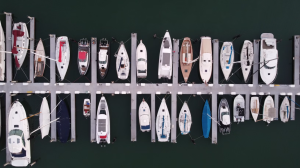
In many marinas, slips are dedicated to one vessel. You either rent the slip from the marina or, in some locations, you can actually buy the slip as real estate (often called a dockominium). In either case, a slip tends to feel like “your” space: you know exactly where you are going every time you come back in.
Read More: Where Can I Park My Boat for Free in Florida: Top 5 Spots 2025
Common Features of Boat Slip
Modern marinas often design boat slips as turnkey home bases for your boat rather than just a wet parking space. Common features include:
- Shore power – 30A, 50A or higher electrical connections so you can run chargers, air-conditioning, dehumidifiers and onboard systems while docked.
- Fresh water – Hose bibs at the head of the slip for rinsing salt, filling tanks and washing down after a trip.
- Dock boxes and storage – Lockable boxes for lines, fenders, cleaning gear and spares.
- Boat lifts or floating cradles – In some slips, a lift keeps the hull out of the water between trips, cutting fouling and reducing maintenance.
- Lighting, Wi-Fi and security – Many marinas add dock lighting, Wi-Fi coverage and CCTV as standard amenities.
| Boat slip feature | Typical specification | Why it matters |
|---|---|---|
| Shore power pedestal | 30–50A outlets, breakers, sometimes metered | Keeps batteries charged and systems running without the engine or generator. |
| Fresh water connection | Shared tap at head of slip | Makes rinsing and topping up tanks quick and convenient. |
| Lift or cradle (optional) | Capacity matched to boat size | Reduces fouling, improves performance and can extend hull life. |
| Dock box and lighting | Lockable storage and low-glare LED lighting | Improves safety and makes regular use more comfortable. |
When you compare a boat slip vs boat dock, these built-in services are often what justify higher slip fees in popular marinas.
Read More: Electric vs Gas Boat Motor: The Ultimate Performance Comparison
Benefits of a Boat Slip
A boat slip offers several practical advantages compared with tying alongside an open dock:
- Better protection and stability – Because the slip surrounds your hull on three sides, your boat is less exposed to wake, passing traffic and wind from multiple directions. This can reduce hull impacts and fender wear, particularly in busy marinas.
- Easier boarding – You usually have a finger pier on at least one side, sometimes both, so you can step on and off the boat at multiple points. This is especially helpful if you have children, older crew or lots of gear to move.
- More tie points – Cleats along both sides allow you to rig bow, stern and spring lines in a very controlled way, keeping the boat centred in the slip even with changing wind and current.
- Security and access control – Many slip-based marinas are gated, with controlled access to the docks, security lighting and cameras. That can reduce the risk of theft or vandalism.
- Potential long-term value – In some locations you can purchase a slip in a dockominium-style arrangement and hold a deed to that slip. Owners may finance a boat slip using a mortgage or similar real-estate loan structure, sometimes alongside association fees, rather than paying rising seasonal rent forever.
Because a slip feels like a private parking bay, it suits boaters who value a predictable, protected berth and expect to use the same marina regularly over many seasons.
What Is a Boat Dock?
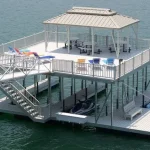
A boat dock is a broader term. It usually refers to the pier, platform or structure that projects into the water from the shore. You may tie one boat or many along the outside of a dock, and in simple residential settings the “dock” is just a single straight structure with cleats or posts where you secure your lines. Unlike a slip, the boat is generally exposed on the outer side and sometimes both ends.

On a private waterfront, your dock might start with a shore-side landing, then include boat dock steps or a ramp down to the main walkway. From there, you either tie alongside or branch out to a T-shaped head that allows one or more boats to berth along the outer edge.
Types of Boat Docks
Although designs vary, most docks fall into two broad categories:
- Floating docks – These rest on buoyant sections that rise and fall with the water level. They are popular on lakes and sheltered estuaries where water depth changes significantly. Floating docks often require less underwater construction and can be moved or adjusted more easily.
- Fixed (static) docks – These are permanently attached to pilings or footings driven into the seabed or lakebed. They stay at a fixed height relative to land, which can be helpful for predictable boarding but less forgiving with large tide swings.
Each type behaves differently in rough water. Floating docks tend to move with the waves, which can reduce structural loading but make them feel less stable to walk on. Fixed and piling docks feel more solid underfoot but transfer more energy from waves into the structure itself.
| Dock type | Best suited to | Main advantages | Key limitations |
|---|---|---|---|
| Floating dock | Lakes, reservoirs, variable water levels | Adapts to water level, easier to move or reconfigure. | Less stable in rough water, may be noisy or bouncy. |
| Fixed dock | Areas with modest tides, firm seabed | Very stable to walk on, long life if well built. | Can be overtopped at extreme high water; needs strong piling work. |
Essential Dock Add-Ons
Whether it is part of a marina or attached to your back garden, a basic dock quickly becomes much safer and easier to use once you add a few key accessories:
- Boat dock steps and ramps – Solid steps, handrails and non-slip treads reduce the chance of slips when moving between shore and dock, especially when carrying coolers or dive gear.
- Bumpers and fenders – Permanent dock bumpers (or rub-rails) soften the contact points where your hull might touch, while moveable fenders stay on the boat.
- Cleats, rings and bollards – Adequately spaced tie-off points make it easier to run proper bow, stern and spring lines.
- Safety ladders – A re-boarding ladder is critical in case someone falls in, particularly in cold water.
- Signs and lighting – Simple “No wake” or “Private dock” signs, reflective strips and low-glare lighting all reduce nighttime risks.
When weighing a boat slip versus a boat dock, remember that you can add many of these accessories to either option; however, marina slips often include them as part of the package.
8 Key Differences Between Boat Slip and Boat Dock
1. Boat Slip vs Boat Dock: Design & Structure
The biggest structural difference between a boat slip and a boat dock is their layout. A dock is the platform itself – usually straight, open on the water side and used for multiple tasks such as loading, swimming and fishing. A slip, on the other hand, is a three-sided recess off a dock or pier where a single boat fits snugly, open only at one end.
That means a slip behaves more like a parking bay in a multi-storey car park, while a dock is more like the kerbside. If you want your own marked “space”, the slip gives you that physical separation, whereas a simple dock might see guests, kayaks, paddleboards and visitors all using the same edge.
2. Boat Slip vs Boat Dock: Ease of Docking & Manoeuvring
From the helm, the feel is different too. At a dock, you are usually performing a simple side-to mooring: bring the boat parallel, control speed, and use lines and fenders to settle in. In a slip, you line up with the opening, then ease the boat between the piers and stop with the bow near the head of the slip.
Many skippers find that once they learn how to dock a boat in a slip, it becomes very repeatable: the same angles, marks and throttle settings every time. You can use pilings, neighbouring boats and dock edges as visual reference points, and spring lines to “winch” the boat into the perfect spot. However, narrow slips in strong crosswinds or currents can be intimidating for beginners, especially in bigger beamier boats.
At a simple dock, you have more freedom to approach at varying angles and bail out early if things look wrong. The trade-off is that there may be more movement as people step on and off, and less protection once you are tied up.
3. Boat Slip vs Boat Dock: Space & Layout Requirements
Boat slips usually demand more planning at marina level because you are not just parking one boat against a straight edge – you are designing a whole grid of fairways and fingers. As a rule of thumb, many designers size the slip to about 1.25–1.5 times the boat’s beam, so an 8–10 ft beam runabout might sit in a 10–14 ft wide slip, while a 12 ft beam cruiser may need 14–16 ft. On top of that, the fairway – the water “street” you turn in – is often set at roughly 1.5 × the boat’s overall length, so a 25 ft boat may need around 38–45 ft of clear fairway to turn or back comfortably into its space. Add a finger pier that is typically 70–80% of the boat’s length (about 18–20 ft for a 25-footer), and you can see how quickly each slip becomes a defined rectangle of water that the marina must reserve for one vessel.
For a private waterfront owner, a straightforward dock often fits more neatly into the available shoreline because it projects in a single line rather than carving out individual boxes of water. Residential guidelines commonly work with a walkway 4–6 ft wide and a main head section around 6–8 ft wide, with overall dock lengths of 20–40 ft for small boats depending on depth and local rules. If you only need to moor one modest boat, a simple straight dock with a perpendicular head can give you all the day-to-day usability you need without the extra planning needed for slip grids and turning basins.
On the flip side, if you want to berth multiple boats in the same footprint – for example, two family boats or a motorboat and a small sailing yacht – a pair of slips off a main dock can actually use the same patch of water more efficiently than tying everything side-to along one edge. By giving each hull its own 10–14 ft wide slip off a shared main walkway, you convert one length of shoreline into several neatly organised “parking bays”, at the cost of needing a wider fairway and a more carefully engineered layout.
4. Boat Slip vs Boat Dock: Safety & Weather Protection
For pure protection, boat slips usually have the edge. Being surrounded on three sides by structures and neighbouring boats dampens wave energy and wake, and provides more surfaces where you can safely rest fenders. Some marina layouts use breakwaters or inner basins so that the slips sit in relatively calm water even when the outer harbour is lumpy.
Docks can be more exposed, particularly if they are built on open shorelines without a protective harbour. A fixed or piling dock may be structurally stronger in heavy weather than a light floating finger, but the boat moored alongside still takes the brunt of passing chop and surge. In very rough locations, owners sometimes combine both ideas by tying in a slip fashioned between piles, with flexible hardware that allows some movement while keeping the boat off the main dock face.
For you as a boater, the key question is not just “Which is stronger?” but “How forgiving is this arrangement if the weather turns nasty while I am away?”. A well-protected slip in a sheltered basin will generally keep your boat more stable than an exposed dock on a windy creek.
5. Boat Slip vs Boat Dock: Cost to Build or Rent
Costs vary hugely by region, site conditions and demand, so you should treat any example numbers as illustrative only. Still, some broad patterns appear when comparing a boat slip vs boat dock.
On the rental side, marinas often price slips per linear foot of boat length, per season or per month. One study of marina pricing suggested that a 25-foot boat might pay roughly US$3,000–US$4,000 for a summer slip in a mainstream marina, while dry-stack or other storage options were slightly cheaper. In high-demand locations, rates can be substantially higher; in quieter regions, significantly lower. Some marinas also offer annual rates with small discounts over seasonal pricing.
Private docks introduce a different cost profile. You may pay once to build a dock (including pilings, permits and utilities) and then carry ongoing maintenance and insurance. Construction costs depend on materials, depth, exposure and local regulations; rocky or deep sites can be much more expensive than sheltered, shallow ones.
When you ask how to finance a boat slip, you are really asking whether you are renting or buying. If you rent a slip, you normally pay from income or savings, possibly rolling it into a broader boating budget that also covers loan repayments, maintenance and insurance. If you buy a deeded slip or dockominium, some lenders allow you to use a mortgage or property-style loan, secured against the slip itself; others might suggest a marine-specific loan or line of credit.
| Option | Typical payment model | Pros | Cons |
|---|---|---|---|
| Renting a marina slip | Monthly or seasonal fee per foot of boat length | Lower upfront cost; flexible if you move area. | Ongoing payments; rates can rise; limited control over rules. |
| Buying a slip (dockominium) | Property-style purchase funded by cash or mortgage | Long-term security; potential resale value. | Higher upfront cost; association fees; resale depends on market. |
| Building a private dock | One-off construction cost plus maintenance | Full control over design and access. | Permits and engineering; storm and wear-and-tear risks. |
The smart approach is to work out the real annual cost of each option over several years, including interest if you finance the dock or slip, and then compare that to your realistic boating use.
6. Boat Slip vs Boat Dock: Insurance
Insurance for slips and docks is not as straightforward as many boaters assume. While your boat insurance focuses on the vessel itself, the structure you moor to—whether a private dock or a rented marina slip—is treated very differently across insurers. Understanding these distinctions is essential if you want to avoid unpleasant surprises after a storm or an impact event.
Most boat insurance policies cover the vessel against collision, theft, fire and named weather events, provided the boat is stored or moored in an approved manner. This usually includes being kept in a marina slip; however, insurers often apply stricter conditions or higher premiums in regions prone to hurricanes or severe storms. Importantly, boat insurance protects your boat—it does not usually cover damage to the dock or slip structure itself, whether private or commercial.
Where the differences become sharper is in how insurers classify the dock or slip:
-
A fixed private dock that is permanently attached to your property may fall under the “other structures” section of a homeowner’s policy, much like a detached garage or fence. In such cases, certain perils—fire, lightning, impact damage or vandalism—may be covered. Yet many homeowner’s policies exclude damage caused by flooding, storm surge, ice, water pressure or gradual wear, which are exactly the risks most likely to affect waterfront structures.
-
Floating, seasonal or removable docks are treated differently. Because they are not considered permanent real property, insurers frequently exclude them entirely unless you add a specific endorsement. Many providers classify them as personal property, subject to limited or no coverage at all.
-
If you rent a slip in a marina, the slip structure belongs to the marina operator. Your boat insurance covers the vessel while moored there, but it does not extend to any damage caused to the dock, pilings or fingers—those fall under the marina’s own commercial property policy. If your boat damages marina property (for example, during heavy wind or a mishandled approach), liability cover within your boat policy may apply, but only if explicitly included.
(source: Property Insurance Coverage Law; Progressive) -
Commercial docks and marinas generally require their own dedicated insurance—covering the dock structures, pontoons, fingers, utilities and liability risks. Private boaters cannot rely on personal insurance for these facilities, even if they use them regularly.
| Structure / Scenario | Covered by Boat Insurance? | Covered by Homeowner’s Insurance? | Typical Exclusions |
|---|---|---|---|
| Private fixed dock (permitted, attached to property) | No — boat policies cover the vessel, not the dock. | Yes, often under “other structures”. | Flood, storm surge, ice damage, gradual water wear, improper maintenance. |
| Private floating / seasonal dock | No. | Usually excluded unless specifically endorsed. | Storm/wave damage, detachment, structural failure, water pressure, ice. |
| Rented marina slip | Yes — boat is covered while stored there. | No — structure belongs to marina. | Damage to marina property unless liability cover applies. |
| Commercial marina dock / piers | No. | No — must be insured by marina operator. | Storm/wind/flood unless covered by a commercial policy. |
In practical terms, the key difference is this:
Boat insurance protects your vessel. Homeowner’s insurance (sometimes) protects your private dock. Neither automatically protects a marina dock or slip.
The safest approach is to review your policy wording carefully, ask whether floating or seasonal installations are excluded, and confirm that both the boat and its mooring arrangement meet the insurer’s requirements—particularly before storm season.
7. Boat Slip vs Boat Dock: Convenience
Convenience is personal, but a few trends show up in how people use slips and docks day-to-day.
A slip in a serviced marina offers high convenience if you want to step aboard and go with minimal fuss. You often get nearby parking, trolleys for your gear, on-site fuel, bathrooms and sometimes cafés or chandlers. Your lines stay set, your fenders are in place, and the boat is always in the same spot waiting for you.
A private dock may be more convenient if you live on the water. You avoid driving to a marina, queueing at security gates or working around marina opening hours. Instead, you walk down your own boat dock steps whenever you like. The trade-off is that you are responsible for maintenance, power, water and safety equipment.
8. Boat Slip vs Boat Dock: Best Use Cases
When you put everything together, certain patterns emerge:
- Choose a boat slip if you want maximum protection, predictable access in a busy marina, services such as shore power and water, and you are happy to pay an ongoing fee for that convenience.
- Choose a simple dock if you own waterfront property, prefer the freedom of your own structure, and are comfortable managing maintenance and safety yourself.
- Consider a hybrid approach if you cruise widely: a home dock for day-to-day use, plus occasional rental slips when visiting other marinas.
Docking a Boat: Tips for Slips and Docks

How to Dock a Boat in a Slip
Learning how to dock a boat in a slip feels daunting at first, but it quickly becomes a repeatable routine. A simple step-by-step approach is:
- Prepare early – Get fenders out on both sides, run bow and stern lines, and brief your crew before you turn into the fairway.
- Check wind and current – Note which way the boat drifts when you come off throttle so you can adjust your approach angle.
- Line up the opening – Use a reference (such as a piling or mark on the dock) and aim for the centre of the slip at slow idle.
- Use minimal speed – You should be able to stop the boat with a brief burst of reverse; never go faster than you are happy to bump at.
- Correct gently – Use short nudges of throttle and steering rather than big moves; over-correction is what makes things messy.
- Secure with springs – Once you are in, run spring lines first to stop fore-and-aft movement, then adjust bow and stern lines and fenders.
- Practise, then practise again – Repetition in calm conditions builds the muscle memory you need when the wind pipes up.
The same principles apply whether you are running a small outboard boat or a larger cruiser: look where you want the boat to end up, keep things slow, and use the engine as a tool rather than a sledgehammer.
Read More: Where Can I Anchor My Boat for Free in California: 10 Legal Spots You Should Know
Boat Docking Tips for Beginners
Many first-time boat owners search for boat docking tips after one or two stressful landings. A few habits make a big difference:
- Plan your exit first – If you cannot clearly see how you will get out again, reconsider how you get in.
- Use the environment – Work with wind and current where possible, letting them help you drift into position instead of fighting them.
- Set fenders for the actual contact points – Hang them where the hull will touch dock or piles, not just anywhere along the rail.
- Talk calmly to crew – Simple commands (“bow line first”, “ready to step”) reduce panic and keep everyone safe.
- Never use arms or legs as fenders – Let lines and bumpers absorb the energy; bruised gelcoat is cheaper than a broken ankle.
Whether you end up in a slip or alongside a dock, practising on quiet days is the cheapest training you will ever buy.
Boat Slip vs Boat Dock: Which One Should You Choose?
There is no single right answer in the boat slip vs boat dock debate; there is only the arrangement that best matches your boating life.
- Your location – In busy harbours with limited shoreline, slips may be the only realistic option. On private lakes or rivers, a simple dock may be far more accessible.
- Your budget and time horizon – If you are committed to a long-term home port, investigating how to finance a boat slip or dockominium may make sense. If your plans are shorter term or uncertain, renting a slip or building a modest dock might be safer.
- Your weather and waterway – Exposed coasts, strong currents and large tidal ranges all push you towards more robust, carefully designed structures.
- Your lifestyle – If you enjoy marina life, on-site services and a community of other boaters, a slip is ideal. If privacy and stepping straight from house to boat appeal, a private dock is hard to beat.
The good news is that whichever you choose, you can upgrade, extend or relocate later as your boating changes – provided you go in with realistic expectations about cost, protection and daily convenience.
Frequently Asked Questions
1. Is a boat slip better than a standard dock?
A boat slip is “better” if you want maximum protection, predictable access and marina services such as power, water and security. The three-sided structure gives your boat more shelter and tie-off points than a simple dock, particularly in busy marinas. However, a standard dock can be ideal for a single boat on a private waterfront where convenience and simplicity matter more than shared facilities.
2. How hard is it to dock a boat in a slip?
Docking in a slip feels harder at first because you must control both alignment and stopping distance in a confined space. Once you learn a repeatable routine – setting up early, judging wind and current, and using short engine bursts – many skippers find a slip easier than side-to mooring because the boat naturally “funnels” into its space. Regular practice in calm conditions is the fastest way to build confidence.
3. Does boat slip insurance cover storm damage?
Boat insurance often covers storm damage to the vessel while it is stored in a marina slip, but this depends on your specific policy, any named-storm exclusions and how well the boat is secured. Some policies also consider where the marina is located and may require extra precautions in cyclone- or hurricane-prone regions. Always check your documents and ask your insurer directly which storm risks are covered and what conditions apply.
4. Is my boat dock covered by homeowner’s insurance?
Many homeowner’s policies treat a private dock as an “other structure” on your property, but coverage, limits and exclusions vary. Fixed, permitted docks are more likely to be included; floating or seasonal docks, or docks used commercially, may need separate or specialised cover. It is common for storm surge, flood or gradual wear-and-tear to be excluded even when impact or fire damage is covered. The only safe approach is to review your policy and talk to your insurer.
5. Can I rent a boat slip seasonally or annually?
Yes. Most marinas offer seasonal contracts (for example, summer only) and many also provide annual slip rentals. Pricing is usually based on the greater of your boat’s length or the slip length, sometimes with extra charges for power, live-aboard use or premium locations. In high-demand areas, marinas may have waiting lists for annual slips, while in quieter regions you can choose between short-term and long-term arrangements more freely.
Conclusion
Choosing between a boat slip and a boat dock is really about how you like to boat, where you keep your vessel and how you want to balance cost, protection and convenience. Slips deliver shelter, services and predictability in a shared marina environment; docks offer independence and direct access from your own waterfront. By understanding the structural, financial and insurance differences – and applying a few solid boat docking tips – you can pick the option that keeps both you and your boat happiest in the long run.
References
Boatsetter. (2023, May 10). Marina fees & boat slip pricing explained.
Decks & Docks Lumber Co. (2022, July 11). Boat dock vs boat slip: What’s the difference?
DockGear Supply. (2025, August 2). What is a boat slip? Slip vs dock vs berth explained.
DockGear Supply. (2025, June 11). Is my boat dock covered by insurance? Key coverage facts.
EZ Dock. (2025, January 9). Floating vs. fixed docks.
NRMA Insurance. (n.d.). Boat insurance.
BoatUS. (2012). Buying a dock. Boat Owners Association of The United States.