
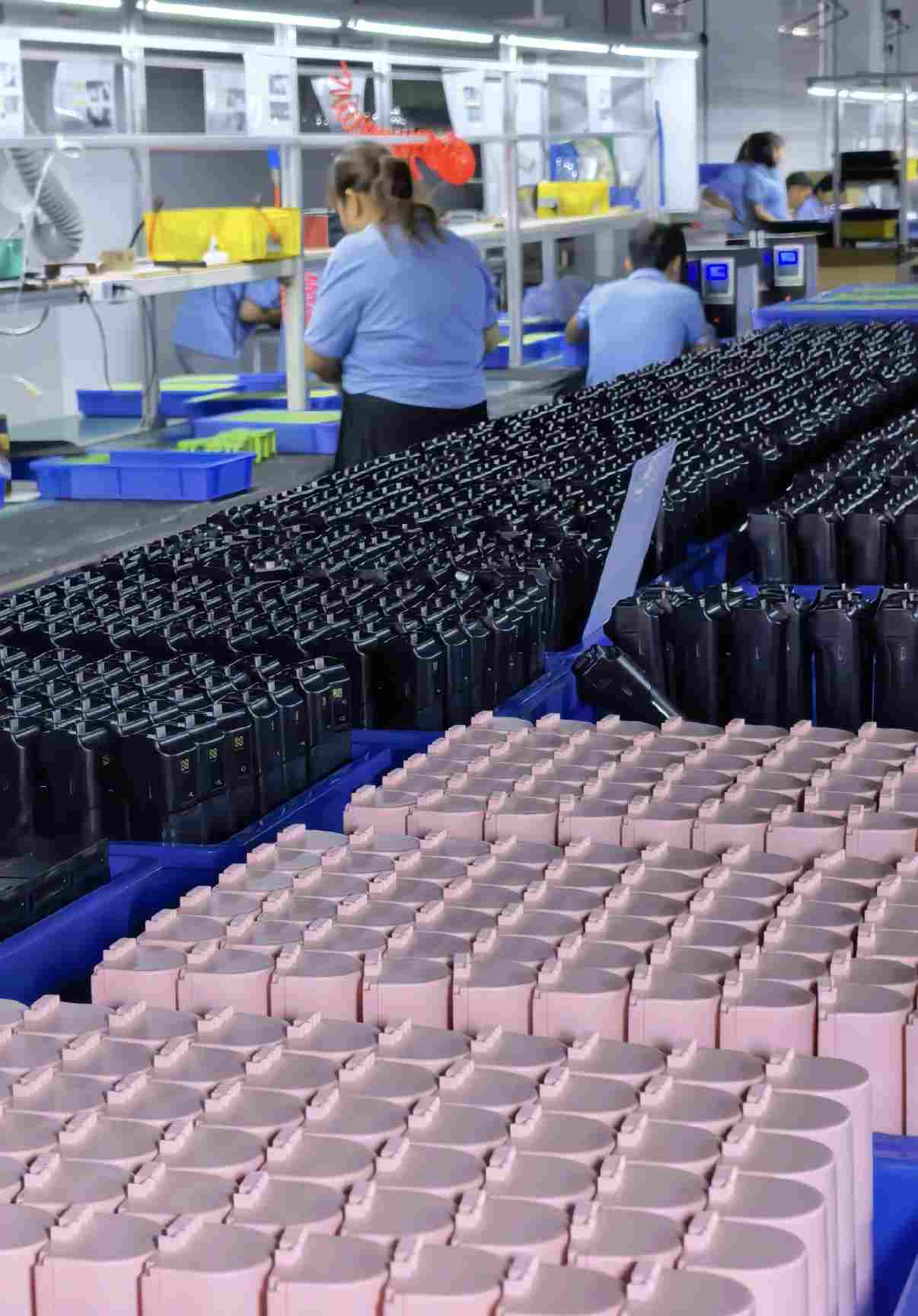
How are lithium-ion batteries manufactured, and how do factories turn powders, metal foils, and liquid electrolytes into rechargeable cells? The answer involves three broad phases: electrode production, cell assembly, and electrochemical finishing. Each phase demands accurate measurements, controlled environments, and careful inspection because small defects can affect battery life and safety.
Lithium-ion cells power electric vehicles, consumer electronics, and stationary energy storage systems. Although their sizes and chemistries differ, most use a cathode, an anode, an electrolyte, a separator, and current collectors. This guide explains the materials, eight major manufacturing steps, and quality checks involved. It also answers common questions about production time, cell formats, and why dry rooms matter.
Raw Materials for Lithium-Ion Battery Manufacturing
Understanding the components is the first step toward answering the question: how are lithium-ion batteries manufactured? The selected chemistry determines the production recipe, while the purity and physical properties of each input influence coating quality and long-term cell performance.
Cathode Materials
The cathode contains active material that largely determines a cell’s operating voltage and energy storage characteristics. Commercial options include lithium iron phosphate (LFP), known for durability and thermal stability, and nickel manganese cobalt (NMC) or nickel cobalt aluminum (NCA), often used where higher energy density is important. Powder composition and particle size must meet defined specifications before coating begins.
Manufacturers mix cathode powder with conductive carbon and a binder to form a connected electrode layer. Polyvinylidene fluoride (PVDF) is widely used with conventional solvent-based cathode systems. How are lithium-ion batteries manufactured using different cathode chemistries? The equipment may be similar, but mixing recipes, coating conditions, and testing requirements change to match the selected material.
Anode Materials
Most commercial anodes rely on natural or synthetic graphite, which stores lithium ions between its layers during charging. Some designs incorporate silicon or silicon oxide to increase capacity, although these additives can expand more during cycling and require careful electrode engineering. The choice of material influences how much energy a cell can store and how it performs over time.
Many graphite anode lines use water-based processing with carboxymethyl cellulose (CMC) and styrene-butadiene rubber (SBR) binders. These ingredients support particle adhesion and help create a uniform coating on copper foil. When considering how lithium-ion batteries are manufactured for reliable fast charging, anode uniformity and appropriate material selection deserve as much attention as cathode chemistry.
Electrolyte Materials
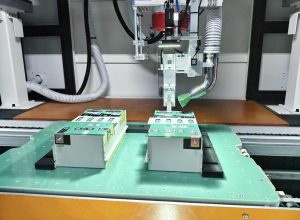
The electrolyte allows lithium ions to travel between electrodes while electrons move through the external circuit. Conventional liquid formulations commonly contain lithium hexafluorophosphate (LiPF6) in organic carbonate solvents. Manufacturers adjust solvent blends and additives to meet requirements for temperature tolerance, charging behavior, and interfacial stability.
Moisture is a major concern because it can react with electrolyte components and create unwanted degradation products. How are lithium-ion batteries manufactured without exposing these sensitive materials to excessive humidity? Facilities use protected storage, carefully managed dry rooms, controlled liquid handling, and suitable sealing processes during cell assembly.
Separator Materials
The separator is a thin, porous membrane that prevents the positive and negative electrodes from touching directly. Polyethylene (PE), polypropylene (PP), and multilayer polymer films are common materials. The pores permit ion transport through the electrolyte while the membrane provides a physical barrier against internal electrical contact.
Some separator designs include ceramic coatings to improve dimensional stability. Manufacturers evaluate thickness, porosity, strength, and resistance to shrinkage against cell specifications. The separator also explains why precision equipment matters: damage, folds, or incorrect alignment during winding or stacking can compromise an otherwise well-prepared cell.
Current Collectors and Casings
Metal foils conduct electrons between active electrode coatings and the cell terminals. Aluminum foil typically serves the cathode, while copper foil supports the graphite-based anode. Foil cleanliness, surface characteristics, and thickness affect coating adhesion and resistance. The completed electrode layers are ultimately connected to tabs or other collection structures.
Cells are enclosed in cylindrical cans, rigid prismatic cases, or flexible laminated pouches. Each format requires different mechanical assembly and sealing arrangements. How are lithium-ion batteries manufactured in these three formats? Their underlying electrochemistry is similar, but winding, stacking, welding, and enclosure handling differ considerably.
Table 1: Core Materials & Functions in Lithium-Ion Cells
| Component | Common Commercial Material | Typical Thickness / Share | Primary Cell Function |
| Cathode | LFP, NMC, or NCA powder | Major material-cost component | Determines key voltage and energy characteristics |
| Anode | Graphite, sometimes with silicon | Composition varies | Hosts lithium during charging |
| Current Collectors | Aluminum and copper foil | Often approximately 6–15 microns | Carries electrical current |
| Separator | Porous PE or PP, sometimes ceramic-coated | Often approximately 9–20 microns | Prevents electrode contact while allowing ion transport |
How Are Lithium-Ion Batteries Manufactured in 8 Steps
How are lithium-ion batteries manufactured from these separate materials? Large factories divide production into electrode manufacturing, cell assembly, and cell finishing. Although individual lines vary, the following eight stages describe the common route from inspected inputs to tested cells.
1. Raw Material Preparation
The process begins with inspecting active powders, binders, conductive additives, solvents, and current collector foils. Quality teams examine particle size, moisture content, chemical purity, and relevant metallic contaminants. Materials that do not meet specifications are isolated rather than introduced into production, where correcting defects becomes more difficult.
Approved ingredients are weighed according to controlled recipes and transferred into suitable storage or mixing equipment. Sensitive materials may require sealed containers or low-humidity environments. How are lithium-ion batteries manufactured consistently across thousands of batches? Accurate weighing, traceability, and standardized incoming checks provide the foundation for repeatable operations.
2. Slurry Mixing
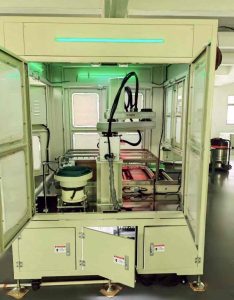
Cathode and anode ingredients are mixed separately into smooth slurries that can be applied to metal foil. Conventional cathode processes often use N-methyl-2-pyrrolidone (NMP) with PVDF binder. Many graphite anode processes use water with CMC and SBR. Planetary mixers and continuous systems disperse the solids into the selected liquid.
Mixing conditions affect viscosity, particle dispersion, and the formation of air bubbles. Vacuum degassing may help remove trapped air that could create coating defects. How are lithium-ion batteries manufactured with consistent electrode surfaces? The slurry must maintain suitable flow characteristics and uniform composition before it reaches the coating line.
3. Electrode Coating and Drying
Precision coaters apply cathode slurry to aluminum foil and anode slurry to copper foil. Slot-die technology is widely used to control coating width and mass loading as the web moves through the production line. Equipment may coat one side and then the other, depending on its configuration and the intended electrode design.
Coated foils enter drying ovens to remove the liquid carrier without damaging the electrode layer. NMP-based operations require appropriate solvent collection and recovery systems, while water-based processes have different drying requirements. How are lithium-ion batteries manufactured with balanced capacity across the electrode? Uniform coating and controlled drying reduce variation from one section to another.
4. Calendering and Slitting
After drying, coated foils pass between rollers during calendering. The rollers compress the active layer to a specified thickness and density, improving particle contact and helping electrodes fit within their intended cell dimensions. However, excessive pressure can reduce porosity and interfere with the movement of lithium ions during operation.
The wide rolls are then slit or cut to the dimensions required for assembly. Operators monitor edge quality because burrs, debris, and cracks can create serious defects later. Additional drying may be used to reduce residual moisture. This stage connects electrode preparation with the tight dimensional tolerances required for cell assembly.
5. Cell Assembly
During assembly, machines combine the cathode, separator, and anode in the correct sequence. Cylindrical cells and some prismatic models use winding, while many pouch and other prismatic designs use stacking or Z-folding. The equipment must maintain accurate layer alignment and prevent contamination throughout the operation.
Electrical tabs or other collector connections are welded, and the electrode assembly is inserted into its housing. How are lithium-ion batteries manufactured without creating internal short circuits? Correct separator placement, electrode overhang, burr prevention, and inspection of the assembled core are essential safeguards at this stage.
6. Electrolyte Filling and Sealing
Automated equipment introduces a measured quantity of electrolyte into the assembled cell. Vacuum- or pressure-assisted filling can help liquid penetrate the porous electrodes and separator. Proper wetting is important because uneven distribution may cause poor initial performance or inconsistent operation across the cell.
The cell is closed according to the enclosure design, but some formats require further degassing and final sealing after formation. How are lithium-ion batteries manufactured while protecting the electrolyte? Manufacturers limit moisture exposure during filling, follow controlled handling procedures, and verify the enclosure’s integrity at the appropriate stage.
7. Formation and Aging
Formation introduces the first controlled charging sequence and, when required, discharge cycles. Initial reactions produce protective interfacial layers, including the solid electrolyte interphase (SEI) on the anode. Formation profiles vary with cell chemistry and must be chosen to support stable electrochemical behavior.
Cells then undergo aging and monitoring to reveal abnormal voltage changes or other early defects. These operations can extend the total production cycle significantly beyond the physical assembly time. How are lithium-ion batteries manufactured for dependable service life? Controlled formation, sufficient resting periods, and careful evaluation help manufacturers identify cells that may not meet requirements.
8. Final Testing and Sorting
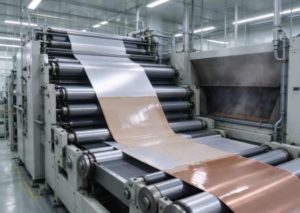
At the end of production, cells are tested for capacity, voltage, internal resistance, dimensions, and other specified characteristics. Depending on the format and process, tests may also examine enclosure leaks or sealing quality. Automated equipment separates units that fail the required acceptance limits.
Approved cells are assigned traceable production records and may be grouped by similar electrical properties for use in modules or packs. How are lithium-ion batteries manufactured to a consistent commercial standard? Final testing confirms that a completed assembly performs as expected rather than assuming successful construction guarantees a reliable product.
Table 2: Eight Manufacturing Stages & Operating Environments
| Production Stage | Core Equipment | Key Process Control |
| Raw Preparation & Mixing | Inspection tools and slurry mixers | Purity, moisture, dispersion, and viscosity |
| Coating & Drying | Slot-die coater and drying oven | Mass loading and solvent removal |
| Calendering & Cutting | Roll press and slitting equipment | Coating density and edge quality |
| Assembly & Filling | Winder or stacker and filling system | Alignment, humidity, and electrolyte wetting |
| Formation & Testing | Battery cyclers and electrical testers | Capacity, voltage, resistance, and stability |
Quality Control in the Lithium-Ion Battery Manufacturing Process
How are lithium-ion batteries manufactured with consistent quality in high-volume facilities? Effective inspection begins before electrode production and continues through cell finishing. Catching problems early reduces waste and helps prevent defective material from advancing to later stages.
Incoming Material Inspection
Quality laboratories check active powders for moisture, particle size, and unwanted elements. Typical analytical methods include Karl Fischer titration, laser diffraction, and elemental analysis. Incoming aluminum and copper foils are also examined for surface damage and relevant physical properties before coating starts.
Suppliers and manufacturers establish acceptance limits that reflect the intended cell design. When testing reveals a deviation, the batch may require investigation or rejection. These controls are important because contamination introduced at the beginning can become difficult to detect once the materials are enclosed inside a battery.
Electrode Quality Inspection
Inline equipment measures coating consistency and helps detect surface problems before electrodes reach assembly. Thickness or mass-loading gauges identify uneven coatings, while optical cameras can flag scratches, pinholes, streaks, and particle agglomerates. Slitting inspection also looks for edge defects that could damage the separator.
How are lithium-ion batteries manufactured with predictable electrode performance? Producers use these measurements to adjust coating and calendering conditions, isolate defective web sections, and monitor long-term process stability. Good electrode inspection supports both performance consistency and efficient material use.
Cell Assembly Inspection
Automated vision systems monitor the position of electrodes and separators during winding or stacking. Some production lines use X-ray imaging to inspect internal alignment, tab placement, and other features that may be hidden after the assembly enters its enclosure. Mechanical defects require careful attention because they can lead to internal electrical contact.
The negative electrode generally extends slightly beyond the positive electrode according to a controlled design. This arrangement supports appropriate alignment and charging behavior. Inspection also checks for debris and damaged edges, ensuring that acceptable raw materials are not compromised during assembly.
Finished Cell Inspection
Finished-cell testing evaluates performance after formation and aging. Manufacturers may measure discharge capacity, internal resistance, open-circuit voltage changes, and seal integrity. The selected combination of tests depends on the design, production method, and customer requirements. Results are compared against defined limits before cells are approved.
How are lithium-ion batteries manufactured with reliable traceability? Each cell can be associated with production conditions, test results, and a unique identifier. These records help teams investigate defects, isolate affected lots, and sort acceptable cells into compatible groups for later pack assembly.
Table 3: Quality Control Checkpoints Across Battery Production
| Inspection Phase | Measurement Tool | Target Defect Prevented |
| Incoming Materials | Karl Fischer and elemental analysis | Moisture and chemical contamination |
| Electrode Web | Inline gauges and optical cameras | Uneven coating, pinholes, and damaged edges |
| Assembled Core | Vision systems and X-ray inspection | Misaligned layers and tab defects |
| Finished Cell | Electrical tests and leak checks | Unstable performance and enclosure faults |
Conclusion
How are lithium-ion batteries manufactured from raw inputs to ready-to-use cells? Factories prepare electrode materials, coat and cut foils, assemble layered structures, fill them with electrolyte, and complete formation, aging, and electrical testing. Every stage contributes to the cell’s capacity, durability, and safety.
Understanding how lithium-ion batteries are manufactured also reveals why quality assurance must extend across the entire production line. Accurate material specifications, controlled processing, detailed inspection, and complete traceability help manufacturers deliver cells that meet their intended performance requirements.
How Are Lithium-Ion Batteries Manufactured FAQ
How long does it take to manufacture a single lithium-ion battery cell?
Production time varies with chemistry, cell design, and factory procedures. Electrode processing and physical assembly can take hours, while electrolyte wetting, formation, aging, and testing may extend the overall process over several days or longer.
Why do battery factories require ultra-dry rooms during assembly and filling?
Many lithium-ion electrolyte components react adversely with moisture. Low-humidity conditions help reduce unwanted reactions, protect sensitive materials, and support reliable electrolyte filling and cell performance.
What is the difference between cylindrical, prismatic, and pouch cell manufacturing?
Cylindrical cells commonly use wound electrodes inside metal cans. Prismatic designs can use winding or stacking inside rigid enclosures, while pouch cells generally use stacked electrodes in flexible laminated packaging. Assembly and sealing methods differ accordingly.
What is formation in lithium-ion battery production?
Formation is the controlled initial charging process that establishes important protective layers, particularly the SEI on the anode. Subsequent monitoring and aging help evaluate whether the cell has stabilized appropriately.
Where can I explore authoritative technical guides, industry roadmaps, and battery research?
The U.S. Department of Energy, Argonne National Laboratory, and VDMA publish information on battery materials, manufacturing equipment, and production methods. Peer-reviewed engineering journals provide further research on individual processing stages and quality testing.